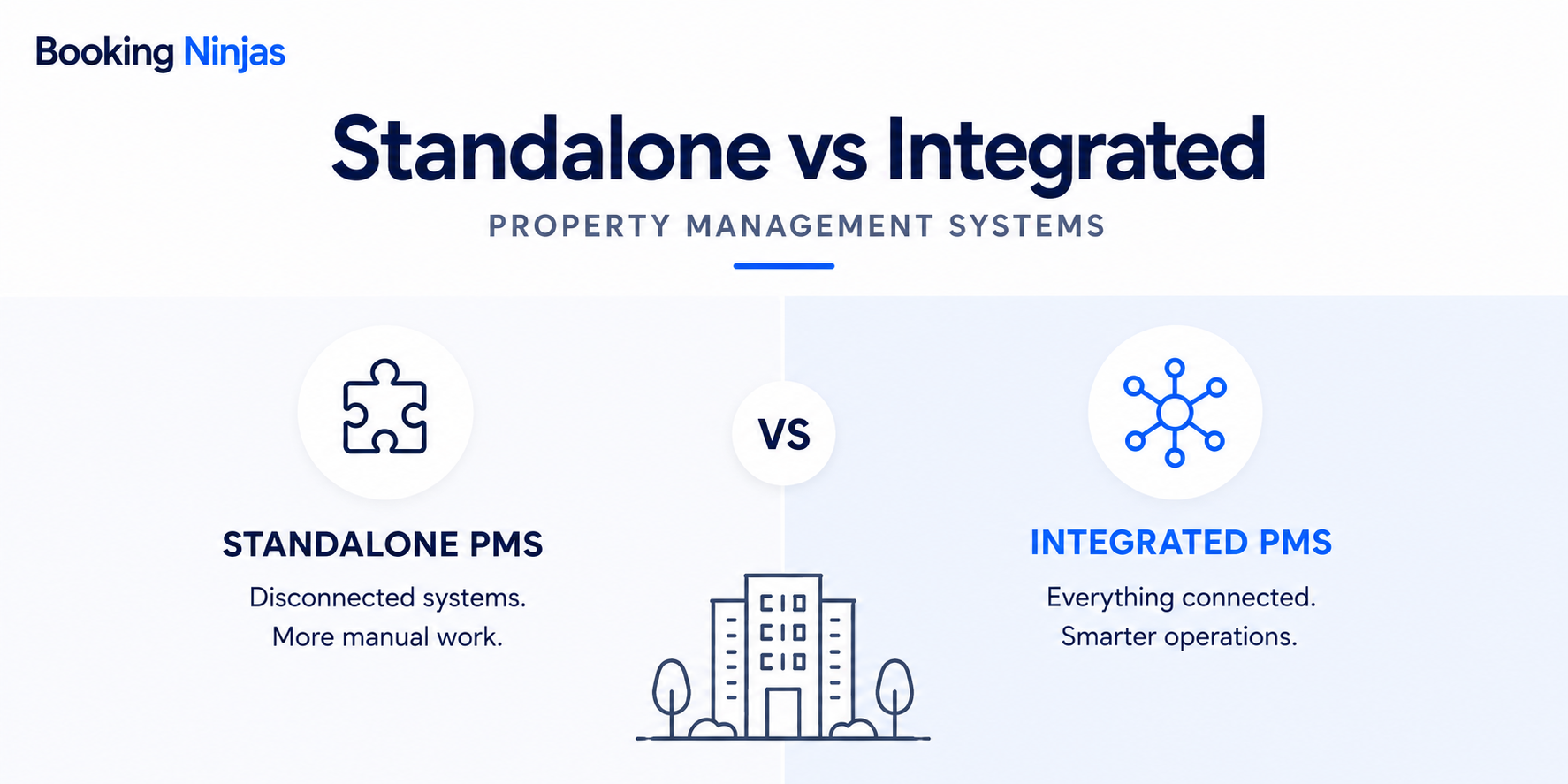
Choosing between standalone and integrated property management systems is not simply a question of how many features one product contains. It is an architecture decision about where operational data lives, which system owns each process, how information moves between systems, and what happens when the organization changes.
Integrated does not necessarily mean placing every business function inside one application. A strong integrated architecture can combine a central property operations platform with specialist accounting, ERP, payment, access, marketing, or other systems where those systems remain appropriate.
What is the difference between a standalone and integrated property management system?
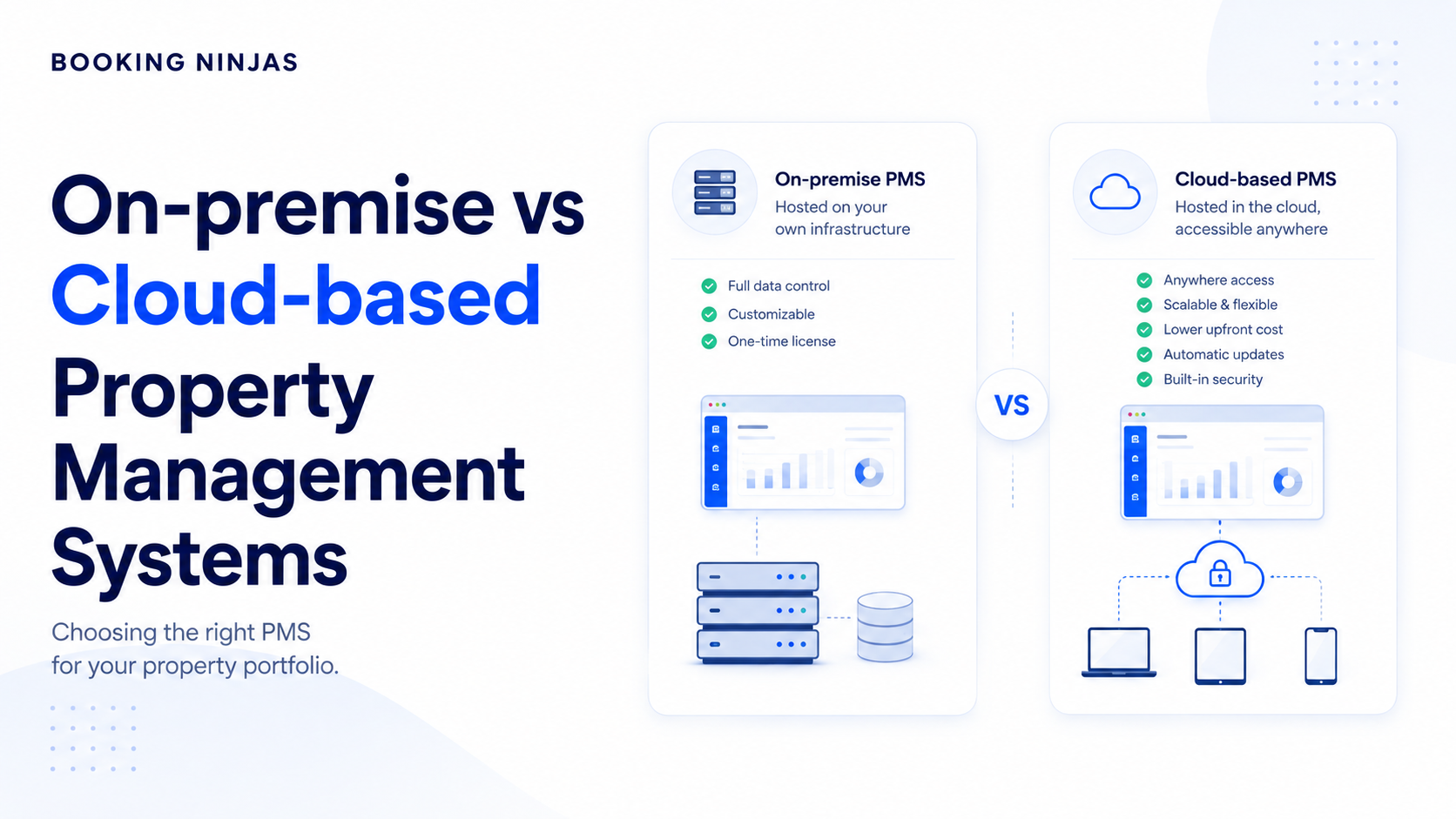
A standalone property management system primarily performs its own set of property-management functions. It may still offer APIs or individual integrations, but its workflows and data model are largely contained within that application.
An integrated property management architecture connects property-management activity with other processes and systems so that records and workflow events can move across operational boundaries.
| Area | Standalone approach | Integrated approach |
|---|---|---|
| Primary scope | Concentrated around a defined property-management function or application. | Connects multiple operational functions or systems around shared processes. |
| Data | Records may remain primarily within the application. | Records can be shared or synchronized according to defined system ownership. |
| Workflow | Workflows generally execute inside the individual system. | Workflows can cross departments, modules, or connected external systems. |
| Reporting | Reporting normally focuses on data held by that application. | Reporting can combine connected operational, customer, and financial information. |
| Change | New requirements may require another application or additional integration. | New workflows can potentially extend the existing platform or connected architecture. |
Is standalone versus integrated really a binary choice?
Not anymore.
Modern property technology can be structured in several ways.
One application performs a specific job with little data exchange outside it.
Several specialist applications exchange selected records through integrations.
Multiple operational functions are provided within the same product environment.
Core operational data and workflows share a platform while specialist external systems remain connected where appropriate.
What is a system of record, and why does it matter?
A system of record is the system designated to own the authoritative version of a particular type of information.
Different data domains can have different systems of record.
| Data domain | Possible system of record | Connected systems may need |
|---|---|---|
| Property operations | Property management or operating platform. | Availability, occupancy, reservation, lease, unit, or service information. |
| Customer relationship | CRM or Salesforce-based platform. | Contact, account, lead, opportunity, tenant, member, or guest information. |
| Accounting | Accounting platform or ERP. | Invoices, payments, expenses, journal-related data, and financial classifications. |
| Payment transaction | Payment processor or payment platform. | Transaction status, settlement information, and payment references. |
| Physical access | Access-control platform. | Identity, location, dates, permissions, and credential status. |
Defining ownership reduces the risk that two systems become competing versions of the same record.
When can a standalone property management system make sense?
A standalone application can be appropriate when the business problem is narrow enough that most of the relevant workflow stays within one application.
Examples can include situations where:
- The operational model is relatively simple
- Few external systems need the same data
- Cross-department workflows are limited
- Reporting can remain application-specific
- The system already handles the required specialist function well
- Integration requirements are small and stable
- The organization accepts separate user experiences
- The expected future scope is reasonably predictable
Standalone does not automatically mean outdated, inflexible, or unsuitable. A specialist application may be the correct component of a wider architecture if it performs its role well.
When does an integrated property management architecture become more useful?
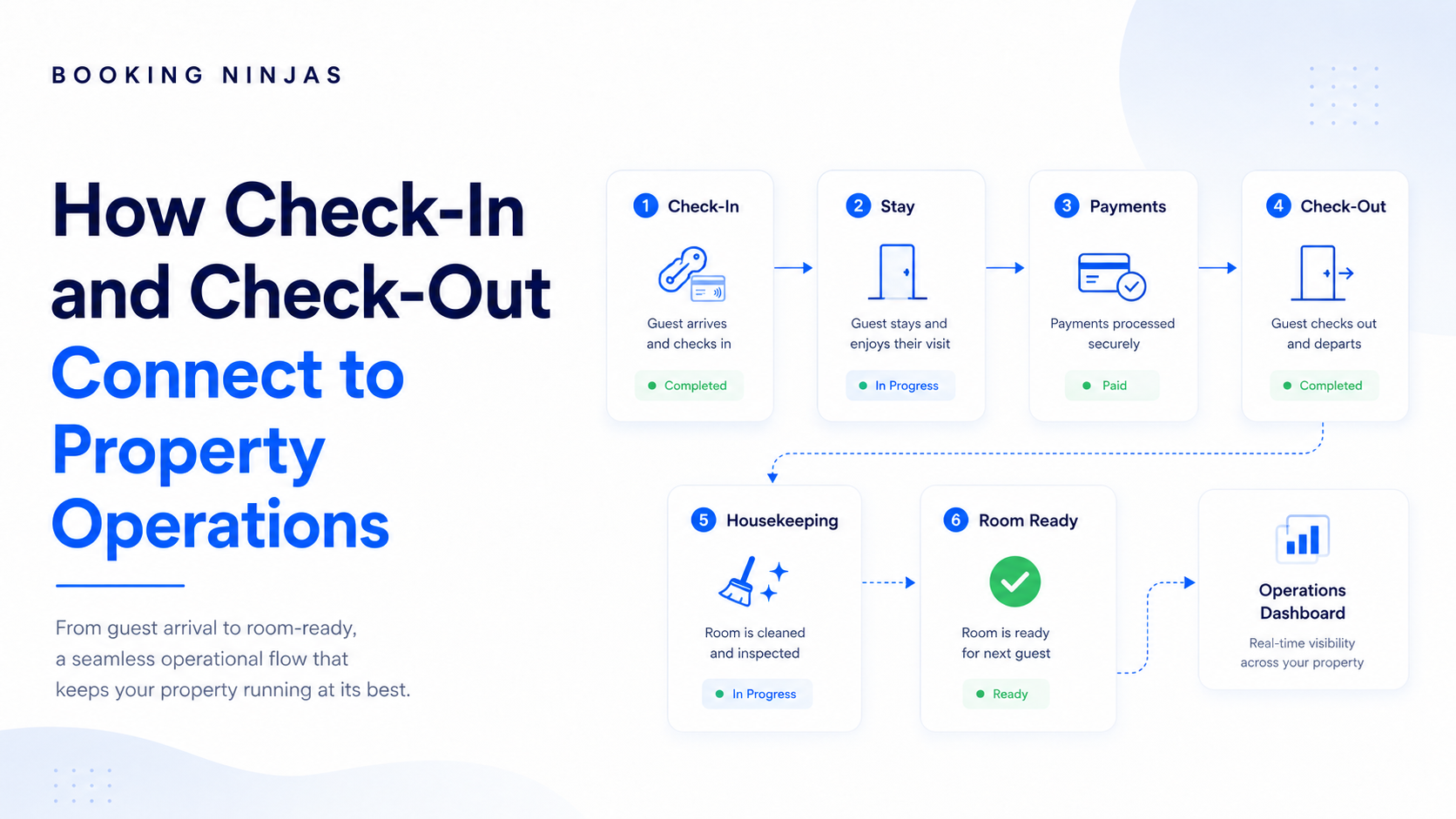
Integration becomes more important when multiple processes depend on the same records or when one operational event must trigger work elsewhere.
For example:
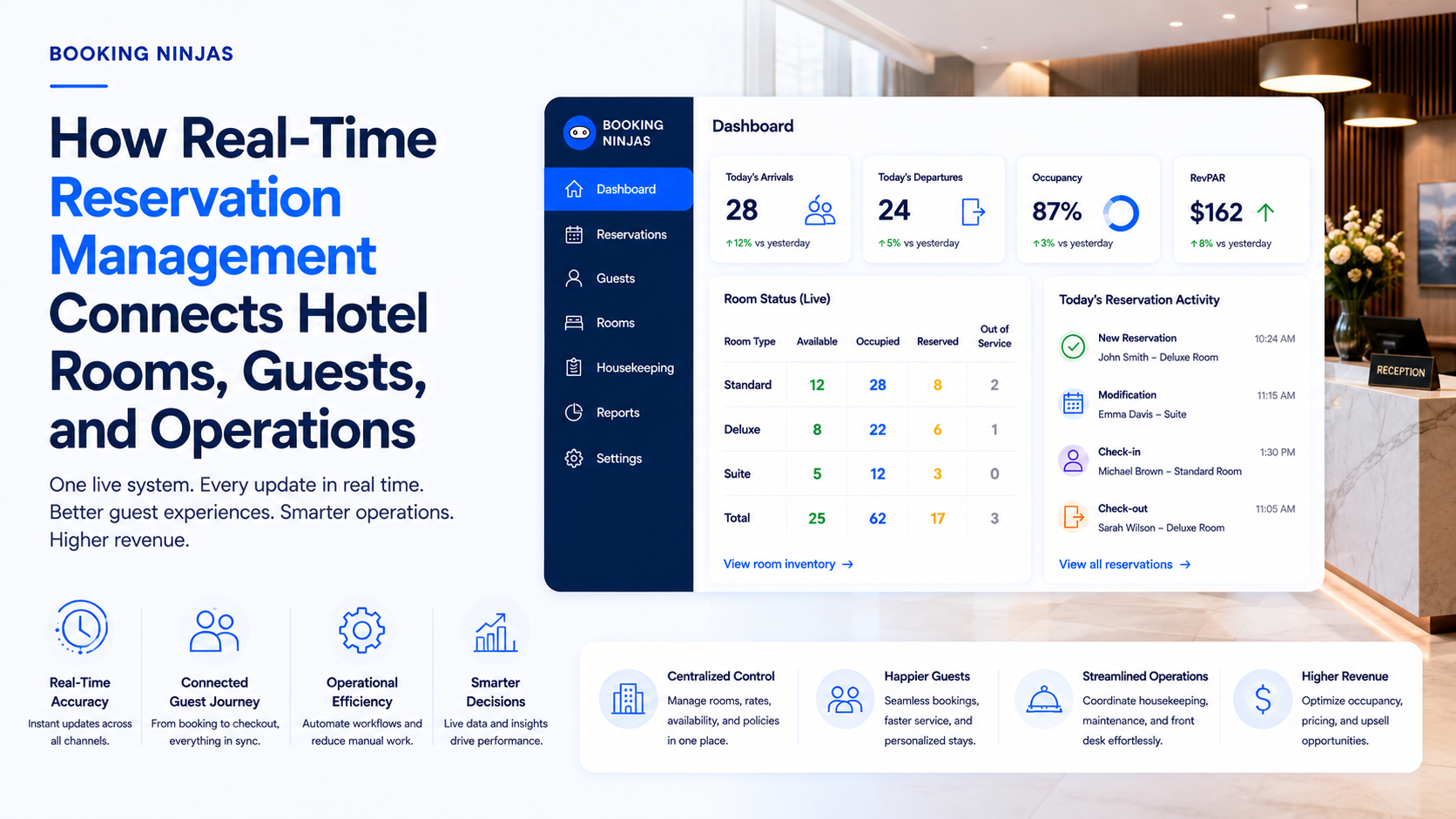
- A reservation changes availability
- A lease generates billing activity
- A payment updates an outstanding balance
- A departure affects turnover and future availability
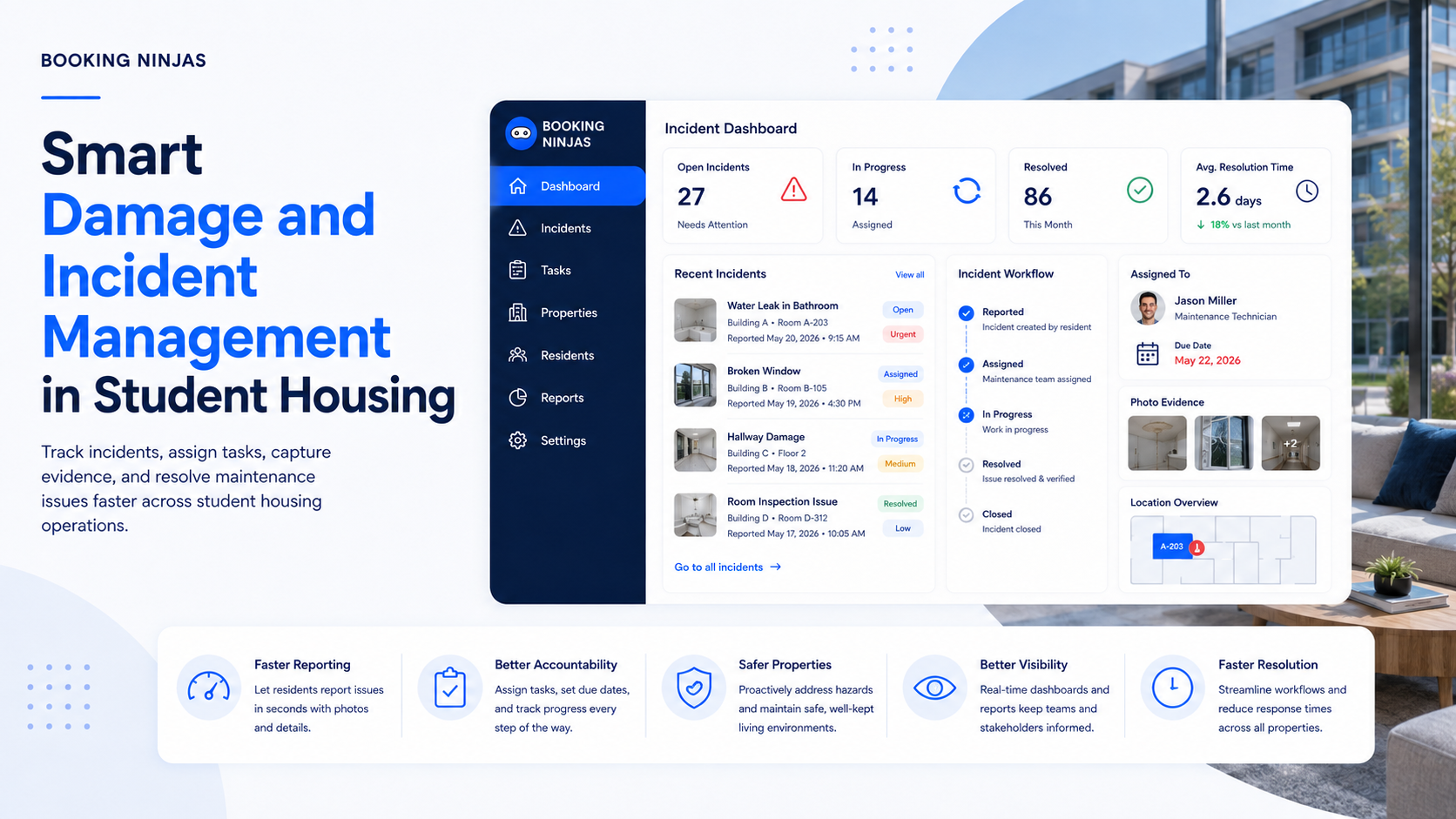
- A service request becomes an assigned work order
- A customer record is needed by sales and operations
- Operational activity must reach finance
- Leadership needs reporting across several departments
In these cases, maintaining separate copies of every record can create additional synchronization and governance requirements.
What actually makes two property systems integrated?
Two systems are not meaningfully integrated simply because one can export a spreadsheet that the other can import.
A useful integration should define:
- Which records are exchanged
- Which system owns each field or record
- What triggers the exchange
- How often synchronization occurs
- How identifiers are matched
- How failed transactions are handled
- Which users can initiate or change the workflow
- How the integration is monitored
Booking Ninjas' Integrations environment supports connections across ERP, accounting, payment, CRM, analytics, communication, cloud, and other systems.
Its API Integration capability supports REST APIs, event-driven connections, and structured exchange with external systems according to the available interfaces and implementation scope.
Why is data flow more important than the number of software products?
An organization can operate several systems successfully when their boundaries and data flows are deliberate.
It can also struggle with a nominally “all-in-one” system if employees still export data, maintain shadow spreadsheets, duplicate records, or rebuild reports manually.
The architecture should answer questions such as:
- Where is a customer created?
- Where is a booking or lease changed?
- Where is an invoice generated?
- Where is a payment confirmed?
- Where is maintenance work owned?
- Where are permissions controlled?
- Where is operational history preserved?
- Where does management reporting originate?
Does an integrated PMS need to replace accounting or ERP software?
No.
Operational property management and statutory or enterprise finance are different responsibilities. An organization may want property activity managed in its operational platform while the accounting system or ERP remains authoritative for the financial ledger and related finance processes.
Booking Ninjas supports this type of architecture through ERP Integration and Accounting Systems Integration .
The implementation should determine which operational events need to move into finance, which financial statuses need to return to operations, and which platform remains authoritative for each record.
Where does CRM fit into property management architecture?
CRM becomes relevant when the relationship with the customer begins before the property-management transaction or continues across multiple operational interactions.
That can include:
- Lead or inquiry
- Organization or account
- Sales opportunity
- Applicant or prospective tenant
- Resident, guest, student, or member
- Communication history
- Service history
- Renewal or future opportunity
A separate CRM can remain part of the technology stack where appropriate. Booking Ninjas' CRM Integration supports connecting external CRM and marketing environments with property workflows.
What happens when a workflow crosses several systems?
Cross-system workflows need more than data synchronization.
The architecture should define:
- What event begins the workflow
- Which system evaluates the rule
- Who owns the resulting task
- Which approvals are required
- What happens if another system is unavailable
- How exceptions are routed
- How completion is returned
- Where the history is retained
Booking Ninjas' Workflow & Process Management supports structured routing, assignments, approvals, escalation, branching, and exception handling directly on Salesforce.
How does system architecture affect reporting?
Reporting quality depends on the underlying data model and the relationships among operational records.
If occupancy lives in one system, customer information in another, maintenance in a third, and financial activity in a fourth, management reporting needs a reliable method for relating those records.
An integrated architecture can make it easier to analyze questions that cross departments, such as:
- Occupancy alongside revenue
- Lease activity alongside billing
- Customer segments alongside operational activity
- Maintenance alongside property utilization
- Service requests alongside locations
- Workflow bottlenecks across departments
- Performance across multiple properties
- Forecasts compared with actual outcomes
Booking Ninjas' Insights provides Salesforce-native reporting and decision-support capabilities across connected operational, customer, and financial data.
Are standalone systems always more customizable than integrated systems?
No.
Whether a system is configurable or extensible depends on its architecture, data model, APIs, workflow engine, permission model, development framework, and vendor approach—not simply on whether it is described as standalone or integrated.
A modern platform-based system may allow substantial configuration across:
- Objects and records
- Fields and relationships
- Roles and permissions
- Workflow rules
- Approvals
- Automation
- Dashboards and reporting
- External integrations
Significant new requirements can still require design, implementation, testing, integration work, or custom development. “Configurable” should not be interpreted as unlimited customization without implementation effort.
How does a platform-based PMS change the standalone-versus-integrated decision?
A platform-based PMS introduces another option between a closed standalone application and a rigid all-in-one suite.
The property-specific applications can share the same underlying platform, data model, security framework, automation, reporting, and extension environment while external specialist systems remain connected where appropriate.
Booking Ninjas is built natively on Salesforce. Its property operations therefore use the Salesforce foundation for data, permissions, workflow, automation, reporting, and integration.
Learn more about the Salesforce foundation behind Booking Ninjas .
How should you choose between standalone and integrated property management systems?
Start with the operating architecture rather than a feature checklist.
| Question | Why it matters |
|---|---|
| Which processes must the PMS manage? | Defines the actual operating scope instead of comparing every available feature. |
| Which records are shared across departments? | Shows where integration or a common data model may have the greatest value. |
| Which systems must remain? | Identifies required accounting, ERP, CRM, access, payment, or other integration boundaries. |
| Which system owns each record? | Prevents competing sources of truth and unclear update rules. |
| Which workflows cross systems? | Reveals the true integration and automation requirements. |
| What reporting must cross departments? | Determines whether operational data needs a shared reporting layer or common platform. |
| How frequently do requirements change? | Helps evaluate configurability, extensibility, and the cost of future changes. |
| What happens when an integration fails? | Tests whether the architecture includes monitoring, exception handling, and operational recovery. |
How should you compare the cost of standalone and integrated systems?
Subscription price alone does not describe the cost of a technology architecture.
Depending on the organization, the comparison may need to include:
- Software licenses
- Implementation
- Data migration
- Integration development
- Middleware or integration platforms
- Configuration or development
- Training and change management
- Ongoing support and maintenance
- Integration monitoring
- Future changes
An inexpensive standalone application may become more expensive if the organization later builds and maintains many integrations. Conversely, a broad platform may be unnecessary when the workflow is genuinely simple.
How should organizations plan a PMS architecture change?
- Map the current systems. Identify the PMS, CRM, accounting, ERP, payment, access, maintenance, reporting, and other systems currently in use.
- Map the operating workflows. Follow real processes such as inquiry to booking, lease to billing, payment to reconciliation, or request to completion.
- Identify the system of record for each domain. Decide where customer, property, booking, lease, financial, payment, and service records should be authoritative.
- Identify duplicate data. Find records employees currently re-enter, export, reconcile, or maintain independently.
- Define the future boundaries. Decide which functions move into the new environment and which specialist systems remain.
- Design integrations explicitly. Define fields, direction, triggers, frequency, identifiers, permissions, failure handling, and monitoring.
- Plan data migration. Determine what historical data is required, cleanse it, map it, test the migration, and validate the resulting records.
- Test complete workflows. Test cross-system scenarios and exceptions rather than only checking whether individual features work.
- Review the architecture after launch. Identify remaining duplicate entry, integration failures, shadow spreadsheets, workflow bottlenecks, and reporting gaps.
Where does Booking Ninjas fit in an integrated property technology architecture?
Booking Ninjas is a Salesforce-native platform for bookings and operations . Property, customer, booking or lease, billing, service, workflow, reporting, and other configured operational records can therefore use the broader Salesforce platform foundation.
That does not mean every external system must be replaced. Accounting platforms, ERP systems, payment infrastructure, external CRM or marketing systems, access systems, analytics environments, and other specialist applications can remain part of the architecture where appropriate integrations are available and included in the implementation.
Understand the platform foundation used for property data, workflows, permissions, automation, reporting, and extension.
Explore Salesforce DNA →Connect property operations with finance, payment, CRM, analytics, communication, cloud, and other external systems.
Explore Integrations →Build structured API and event-driven connections across the property technology environment.
Explore API Integration →Keep an established ERP environment while connecting property activity with the required financial workflows.
Explore ERP Integration →Connect operational billing and payment activity with external accounting systems according to the financial architecture.
Explore Accounting Integration →Connect marketing and customer data with leasing and property operations when external CRM systems remain in use.
Explore CRM Integration →Configure routing, approvals, assignments, escalation, and exception handling across structured operating processes.
Explore Workflow & Process →Report across connected operational, customer, and financial data within Salesforce.
Explore Insights →Frequently asked questions
What is a standalone property management system?
A standalone property management system primarily manages its own defined property-management functions and data. It may still connect with other software through APIs or integrations, so standalone does not necessarily mean completely isolated.
What is an integrated property management system?
An integrated property management system or architecture connects property operations with related data and workflows so records can move across functions such as bookings or leasing, billing, payments, customer management, maintenance, reporting, and external systems.
Is an integrated PMS always better than a standalone PMS?
No. A standalone system can be appropriate when the operational scope is narrow and cross-system dependencies are limited. An integrated approach becomes more valuable when several departments and systems depend on the same records or workflows.
Does an integrated PMS mean replacing every existing system?
No. An integrated architecture can retain accounting, ERP, payment, CRM, access-control, analytics, or other specialist systems where appropriate. The implementation should define which system owns each record and how required information moves between them.
Can a standalone PMS integrate with other software?
Yes. Many standalone applications provide APIs or integrations. The important questions are which data can be exchanged, whether the required workflow is supported, how synchronization works, and how integration failures are handled.
What is a system of record in property management?
A system of record is the system designated to hold the authoritative version of a particular type of information. An organization can have different systems of record for property operations, customer data, accounting, payments, access, or other domains.
Does Booking Ninjas replace accounting or ERP software?
Not necessarily. Booking Ninjas can manage property operational workflows while integrating with external accounting and ERP systems. The appropriate system ownership, financial workflow, and integration model depend on the organization's architecture and implementation scope.
Is Booking Ninjas built on Salesforce?
Yes. Booking Ninjas is Salesforce-native, allowing property records, customer data, workflows, permissions, automation, reporting, and integrations to use the broader Salesforce platform foundation.
Design the property architecture before choosing the software
See how Booking Ninjas can connect property operations, Salesforce workflows, ERP, accounting, CRM, APIs, reporting, and other systems within an architecture designed around your operational requirements.