AI + Student Housing
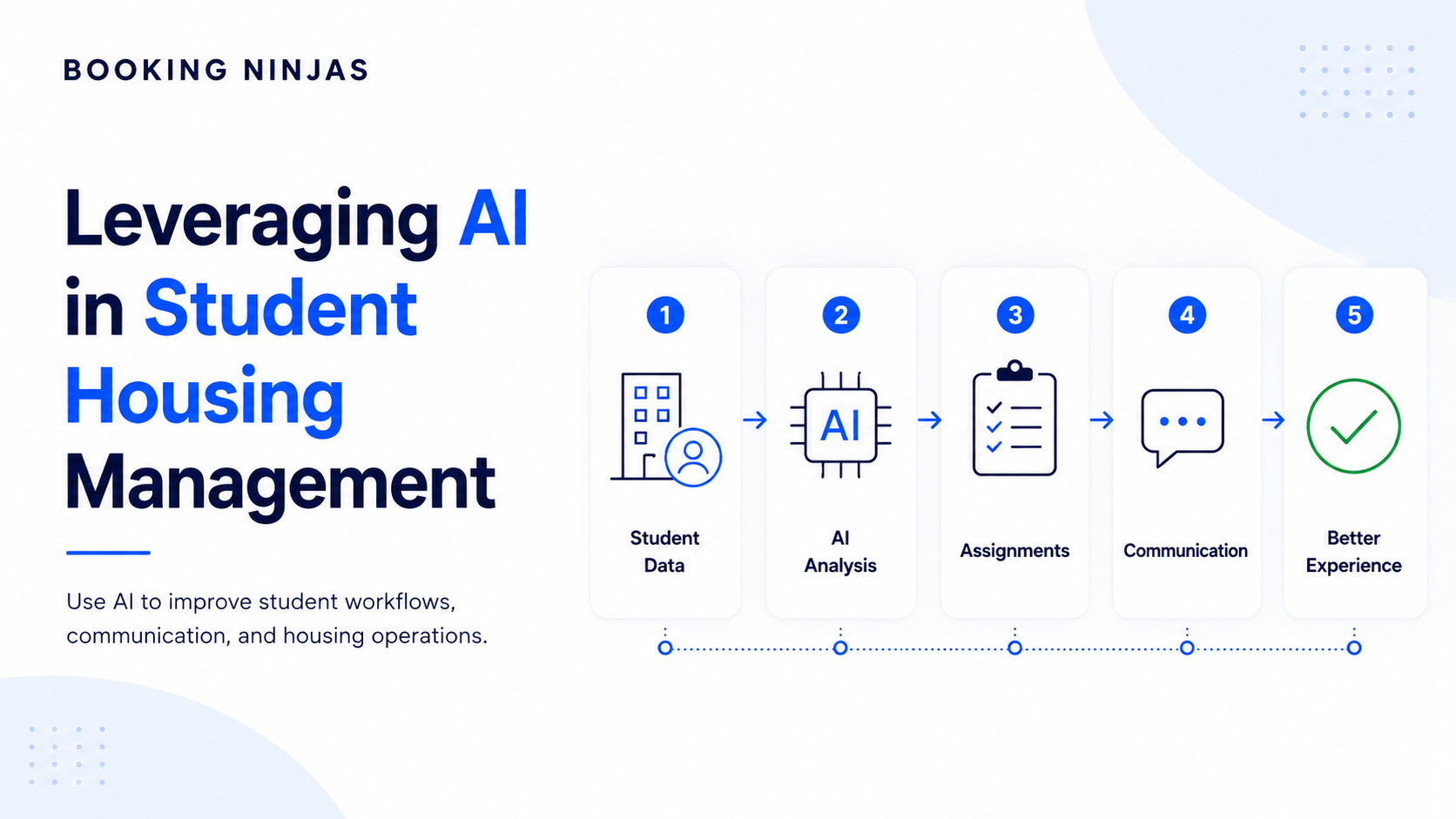
The most useful AI in student housing works behind the operation: helping staff understand requests, retrieve the right information, recognize patterns, and reduce repetitive work across the resident journey.
But AI cannot understand a housing operation from isolated records. A resident name without an assignment, a maintenance request without a room, or a payment question without an account balance gives the system incomplete context.
Connected operations create the foundation for AI
International Student House of Washington, DC shows why the operational foundation matters.
ISHDC manages an international residential community for graduate students, visiting scholars, and interns. Its operation includes three historic buildings, accommodates up to 100 residents at a time, and brings together people from more than 70 countries.
The challenge was broader than room management. Staff had to coordinate variable stays, assignments, billing, payments, communications, waitlists, resident records, and ongoing service.
With Booking Ninjas, these workflows could operate with more shared context through variable-length bookings, automated waitlists, resident communication, portal payments, monthly billing, scheduled payments, resident profiles, and reporting.
Why does connected housing data matter for AI?
AI becomes more useful when it can understand the relationship between a resident and the operational records surrounding that resident.
For example, a student asking to extend a stay may involve their current assignment, departure date, available beds, account balance, billing rules, and previous communication. If those records live in separate systems, both staff and AI have to reconstruct the context.
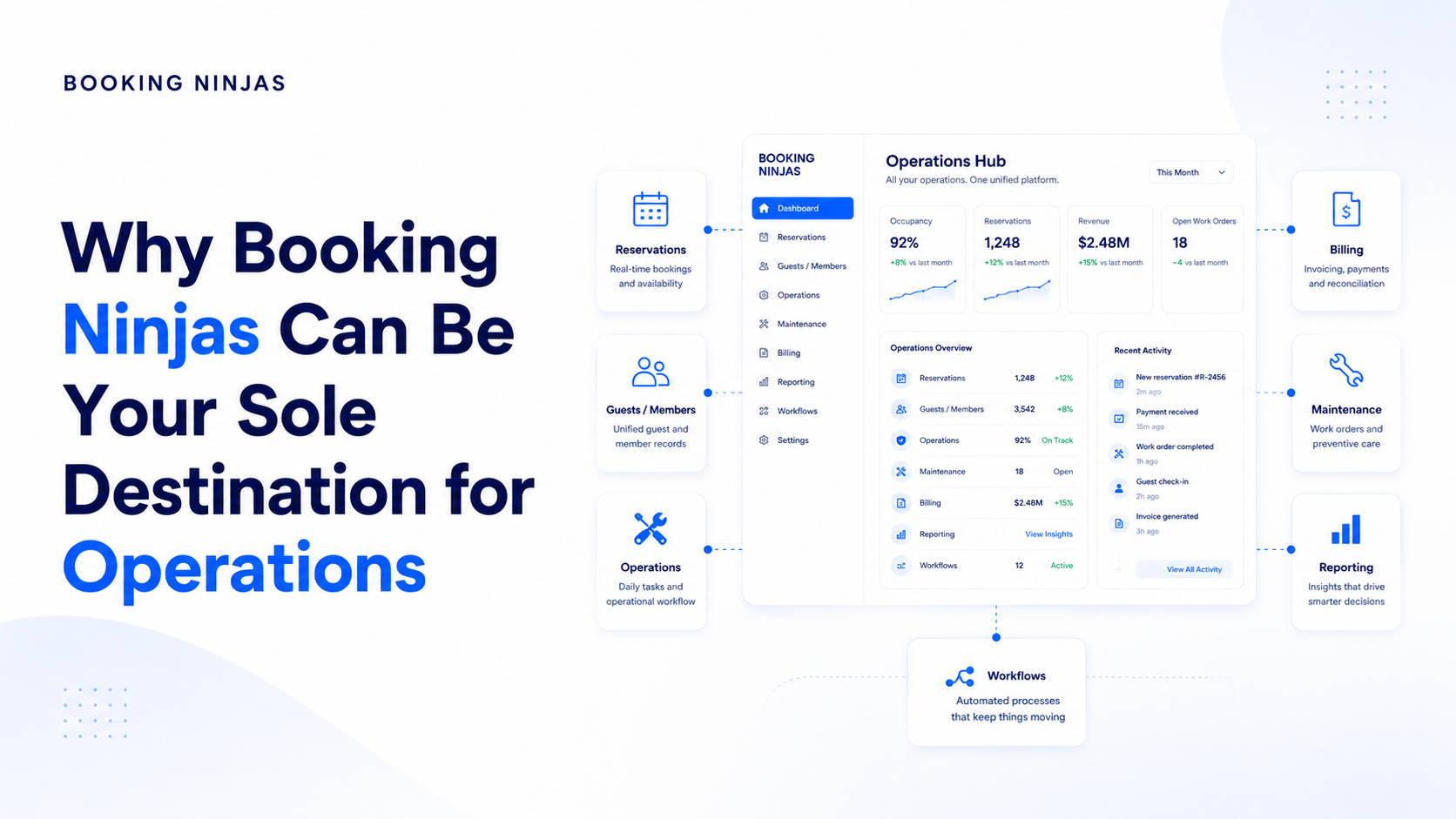
Booking Ninjas' student housing management solution provides an operating structure for managing rooms, beds, residents, assignments, housing periods, maintenance, and related activity.
This is also why AI needs connected operational information rather than simply access to more disconnected data.
Where can AI add value in student housing?
In practical housing operations, AI generally has three useful roles: understanding information, surfacing what deserves attention, and assisting staff with the next step.
Interpret resident messages, summarize histories, categorize information, and retrieve relevant operational context.
Highlight recurring issues, unusual activity, payment exceptions, occupancy patterns, or other signals worth reviewing.
Help staff prepare responses, review information, or work through larger amounts of operational data more efficiently.
AI does not need to make the final decision to create value. In many student housing workflows, its strongest role is helping staff understand the situation faster.
How can AI support the student housing resident journey?
The most practical way to evaluate AI is to look at the points where housing teams already manage information and decisions.
Applications, availability and assignments
Housing teams need accurate information about available rooms or beds, requested dates, eligibility, housing periods, and assignment rules.
Defined rules can usually be automated. AI may help summarize applicant information or support staff reviewing possible matches, while sensitive placement decisions remain governed by housing policy and human review.
Coordinate high-volume arrivals
Concentrated arrival periods can require staff to coordinate room readiness, assignments, payments, documents, communication, and resident support at the same time.
AI can help staff retrieve or summarize resident context, but predictable move-in tasks are often better handled through workflow automation.
Resident questions and service requests
Residents may ask about payments, housing procedures, room changes, maintenance issues, or other services.
AI can help interpret the request and retrieve relevant context. The resulting work should still move through a structured request management process when follow-up is required.
Turn resident reports into trackable work
AI may help summarize or categorize a maintenance report, but substantial physical work still needs ownership, status, and completion history.
A work order provides the operational record behind that work.
See how AI and automation support maintenance operations for the deeper maintenance workflow.
Automate predictable financial activity
Not every advanced workflow needs AI. If a resident should be charged at a known interval according to a defined rule, recurring billing is a more appropriate starting point.
AI may help summarize account information, but balances and payment status should remain grounded in the actual financial records.
Use the full housing history for the next decision
Extensions, departures, balances, turnover, room readiness, and future availability can all intersect at the end of a stay.
AI can help assemble relevant context, while staff retain responsibility for exceptions and final decisions.
When should student housing use automation instead of AI?
Use automation when the rule is already known. Use AI when the workflow benefits from interpretation, summarization, or pattern recognition. Keep people involved when judgment or consequences matter.
| Student housing task | Better starting point |
|---|---|
| Send a payment reminder before the due date | Workflow automation |
| Generate a recurring resident charge | Recurring billing |
| Trigger a defined waitlist action when capacity changes | Rule-based workflow |
| Summarize a long resident message | Potential AI assistance |
| Review patterns across resident or operational records | Potential AI assistance |
| Handle a sensitive wellbeing or housing exception | Human review |
Where should student housing keep human oversight?
Student housing decisions can affect where people live, what they pay, how they receive support, and how sensitive personal situations are handled.
Staff should remain closely involved in areas such as housing placement exceptions, resident wellbeing, safety, financial disputes, hardship arrangements, accessibility requirements, policy exceptions, and complex maintenance decisions.
This is also why data privacy and responsible AI should be part of the operating design rather than an afterthought.
Is your student housing operation ready for AI?
Before choosing an AI assistant, forecasting tool, or other AI capability, check whether the underlying housing operation can provide reliable context.
- Establish a clear source of truth. Residents, beds, assignments, payments, requests, and maintenance activity need clear record ownership.
- Connect the records that belong together. A resident request should be linkable to the resident's housing, account, service, and relevant history.
- Define routine workflows. Ownership, status, escalation, and completion should already make sense before AI is introduced.
- Control data access. AI should only receive the information appropriate for the task and the user's role.
- Define human-review boundaries. Teams need to know when the workflow can continue automatically and when a person must intervene.
- Measure the operating result. Establish the current baseline so any improvement can be measured rather than assumed.
The ISHDC example shows a practical path forward
The important lesson from ISHDC is not that AI replaced student housing work. It is that bookings, billing, payments, waitlists, resident profiles, communication, facilities, and reporting could operate with more shared context.
That creates a stronger foundation for whatever automation or AI the organization may choose to introduce later.
How does Booking Ninjas support AI-ready student housing?
Booking Ninjas is a Salesforce-native platform for bookings and operations . Student housing operators can connect buildings, rooms, beds, resident assignments, billing, payments, requests, maintenance, communication, and reporting within the broader operating environment.
That connected structure is important because automation and AI need reliable operational context to support useful workflows.
Booking Ninjas also provides AI capabilities that can be applied where the data, process, permissions, integrations, and implementation support the intended use case.
The exact setup depends on the housing model, academic calendar, resident processes, policies, integrations, data, and implementation scope.
Build a connected foundation for student housing AI
Connect residents, rooms, beds, assignments, billing, payments, requests, maintenance, communication, and reporting—then decide where automation and AI can provide useful operational support.