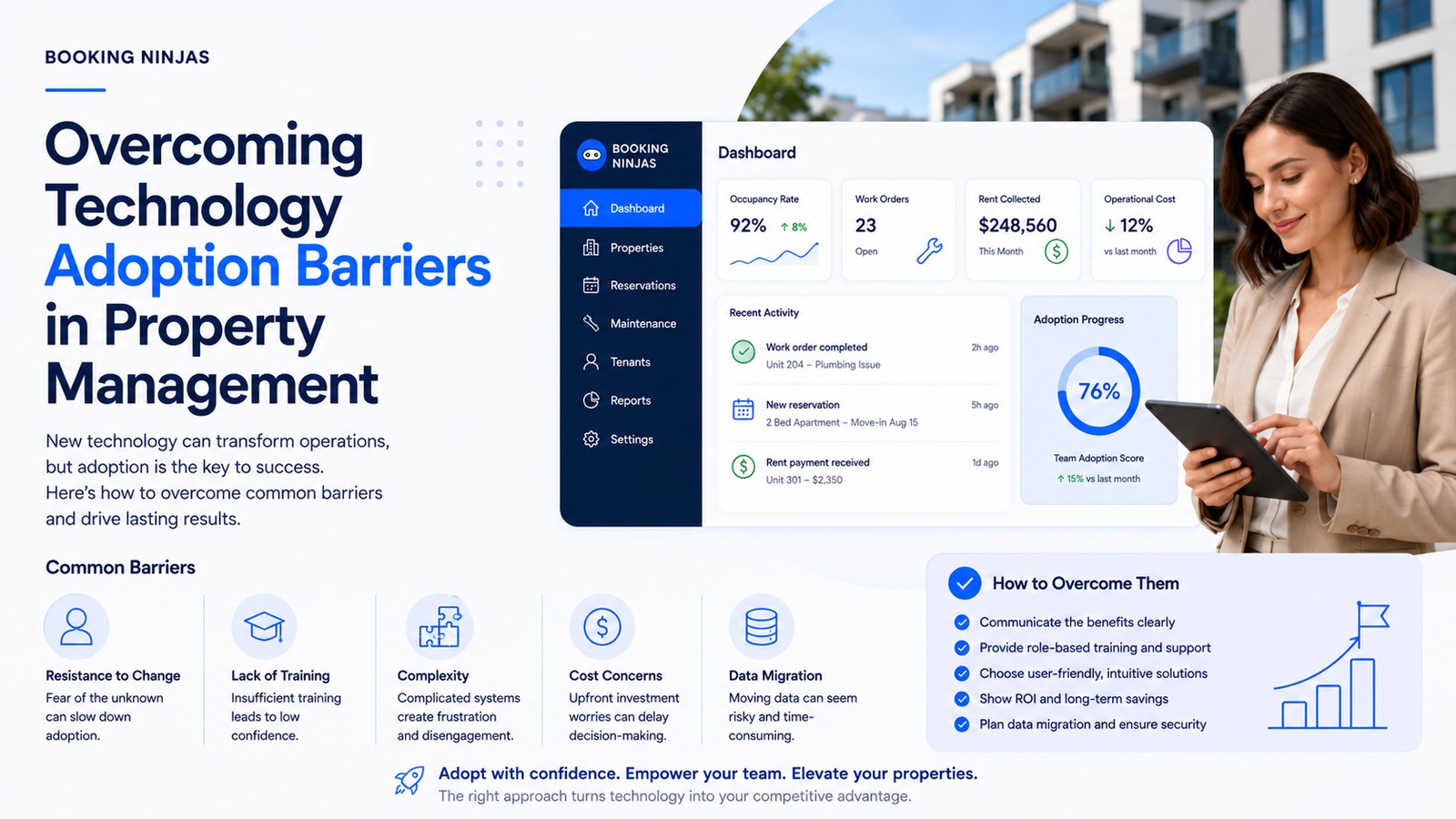
Property management technology adoption succeeds when the organisation treats implementation as an operational change, not simply a software installation. Teams need to understand the workflows being changed, the data and systems involved, the people responsible, and the conditions that define a successful rollout.
Cloud software, workflow automation, integrations, and AI can make parts of property operations easier to manage. None of them removes the need for implementation planning, data preparation, governance, training, or change management.
What matters most when adopting new property management technology?
- Start with the workflow or business problem, not the feature list.
- Separate software cost from the total effort required for implementation.
- Review data migration and integration requirements before committing to the architecture.
- Involve actual users before the final workflow is approved.
- Introduce automation only after the underlying process and exception rules are understood.
- Measure whether people are actually using the new workflow after go-live.
Why do property management technology projects struggle?
Technology adoption problems are often described as resistance to change, but the real cause can exist much earlier in the project.
A team may be asked to use a new system before anyone has clearly defined which existing process should change, which information needs to move, or how an exception should be handled.
| Adoption barrier | What is usually underneath it | What to resolve |
|---|---|---|
| Unclear business case | The organisation knows it wants new software but has not defined the operational problem precisely. | State the workflow, limitation, decision, or information problem that needs to improve. |
| Cost concerns | Subscription price is being evaluated separately from implementation, migration, integrations, training, and internal effort. | Build a complete implementation and operating-cost view. |
| User resistance | Staff may not understand why the workflow is changing or may see that the new process creates additional steps. | Involve users in process design and test the workflow with real scenarios. |
| Integration uncertainty | Important accounting, CRM, payment, access, or other systems still need to exchange information. | Define systems, APIs, data ownership, direction, timing, authentication, and exception handling. |
| Poor data readiness | Existing records may be duplicated, incomplete, inconsistent, or structured differently from the future system. | Decide what should migrate, how it maps, and what requires cleanup or validation. |
| Excessive implementation scope | Too many processes are being redesigned at the same time. | Identify the minimum coherent first release and sequence later phases deliberately. |
| Weak ownership | Everyone participates, but nobody owns decisions, acceptance, training, or post-launch adoption. | Assign business, technical, data, and operational owners. |

Why should implementation start with the workflow rather than the software?
A feature list tells you what a platform can do. It does not tell you how your organisation should use it.
Before configuring technology, document the current operational sequence.
- What starts the process?
- Which person or team owns each stage?
- Which records are created or updated?
- Which approvals are required?
- Which systems participate?
- What information moves between them?
- What happens when the normal process fails?
- Which result marks the process as complete?
Once that sequence is visible, the implementation team can decide what should remain manual, what should be standardised, and what could reasonably be automated.
Booking Ninjas' Workflow & Process Management provides configurable routing, approvals, assignments, notifications, escalation, and structured workflow execution inside Salesforce.
Do you need to replace every existing system at once?
No. A technology modernisation project does not always require an immediate replacement of every application currently in use.
Some existing systems may remain important for accounting, ERP, payments, access control, marketing, communication, analytics, or other specialist functions.
The implementation question is therefore: which system should own each record and process, and how should the remaining systems connect?
Booking Ninjas' Integrations architecture supports connections with external platforms through APIs, middleware, and other integration patterns. The exact effort depends on the external system, its available interfaces, data quality, authentication, and the required data flow.
How should property managers build the business case for new technology?
Avoid beginning with an assumed ROI percentage.
Start by defining the current operating problem in measurable terms and deciding what evidence would demonstrate improvement.
| Business-case question | What to document |
|---|---|
| What is difficult today? | Duplicate entry, disconnected data, manual approvals, reporting delays, service coordination, or another clearly observable problem. |
| What does the current process require? | People, systems, manual steps, handoffs, exceptions, and internal administration. |
| What will implementation cost? | Software, configuration, migration, integrations, training, external services, and internal project time. |
| What should change? | Define the workflow or information improvement expected after implementation. |
| How will the organisation know? | Define adoption, process, data-quality, service, financial, or operational measures relevant to the original problem. |
A business case is stronger when expected outcomes remain measurable but are not presented as guaranteed software results.
Why is data migration often an adoption problem rather than just an IT problem?
Users judge a new system partly by whether they can trust the records inside it.
If customer, property, reservation, payment, maintenance, or other records arrive incomplete or duplicated, staff may return to old spreadsheets or applications because those sources still feel more reliable.
Migration planning should therefore answer:
- Which records need to move?
- Which historical records are actually useful?
- Which fields map directly?
- Which values need transformation?
- Which duplicates need resolution?
- Who validates migrated records?
- Which source remains authoritative?
- What happens when records cannot be migrated cleanly?
Data validation should happen before users are expected to trust the new workflow in production.
How do you reduce staff resistance to a new property management system?
Resistance is easier to understand when the implementation team separates three different causes.
People do not understand why the change is happening
Connect the new process to a specific problem staff already recognise rather than presenting the software itself as the reason for change.
People understand the goal but dislike the new workflow
Test the process with real users. A technically valid configuration may still introduce unnecessary clicks, duplicate work, unclear ownership, or poor exception handling.
People need more practice
Training should focus on what each role actually does rather than demonstrating every feature in the platform.
What should technology training cover?
Training should be based on roles, workflows, and exceptions.
| Training layer | What users need to understand |
|---|---|
| Context | Why the process changed and what problem the new workflow is intended to address. |
| Daily workflow | The records, screens, and actions the specific role uses regularly. |
| Exceptions | What to do when data is missing, an approval fails, a payment does not reconcile, or another unusual case occurs. |
| Responsibility | Which role owns each stage and when work passes to another person or department. |
| Support | Where users should go when they cannot complete the process as designed. |
Booking Ninjas currently provides implementation, onboarding, training, documentation, and support resources around its platform. Its Knowledge Centre provides a self-service reference layer alongside implementation and support processes.
Is a phased rollout better than changing everything at once?
Often, but only when the first phase forms a complete and usable workflow.
Dividing a project into phases can reduce the number of changes that users and implementation teams must validate at one time. Fragmenting one workflow across unfinished systems, however, can create additional confusion.
A useful first phase should have a clear beginning, end, owner, operating records, and acceptance criteria.
Later phases can then extend the platform into additional workflows, integrations, automation, or reporting after the first operating model is stable.
What is a practical property management technology adoption process?
- Define the operational problem. State what needs to change and why the current workflow is not sufficient.
- Map the current process. Identify users, records, systems, approvals, handoffs, exceptions, and reporting requirements.
- Define the target workflow. Decide which steps should remain, change, disappear, or become automated.
- Inventory data and integrations. Identify what must migrate and which external systems must remain connected.
- Define a controlled implementation scope. Choose a coherent first release rather than attempting to redesign every process simultaneously.
- Configure and test real scenarios. Include ordinary workflows as well as cancellations, corrections, approval failures, unusual payments, and other exceptions.
- Train users by role. Teach people the work they perform and how to handle the exceptions relevant to them.
- Go live with clear ownership. Establish who handles system questions, workflow decisions, technical issues, and urgent operational exceptions.
- Measure adoption and refine. Review actual system use, process performance, support patterns, data quality, and unresolved workflow problems.
Does choosing cloud-based software make adoption easy?
Cloud delivery can remove the need to install and maintain the application on local servers, but it does not eliminate operational implementation.
A cloud system can still require:
- Workflow configuration
- Data migration
- Integration work
- User permissions
- Testing
- Training
- Process ownership
- Change management
Evaluate cloud architecture and implementation readiness as related but separate questions.
Where do AI and automation fit into technology adoption?
Automation is most useful after the organisation understands the process it wants to automate.
Rule-driven automation can support tasks such as routing, notifications, approvals, assignments, and other predictable workflow steps.
AI can add analysis such as summarisation, pattern detection, forecasting, classification, or recommendations where suitable data and workflows exist.
Neither should be used to hide an unclear operating process.
Why does the underlying platform architecture matter?
A technology decision affects more than the first implementation. Future requirements may involve new records, workflows, user roles, integrations, reports, automation, or additional operating models.
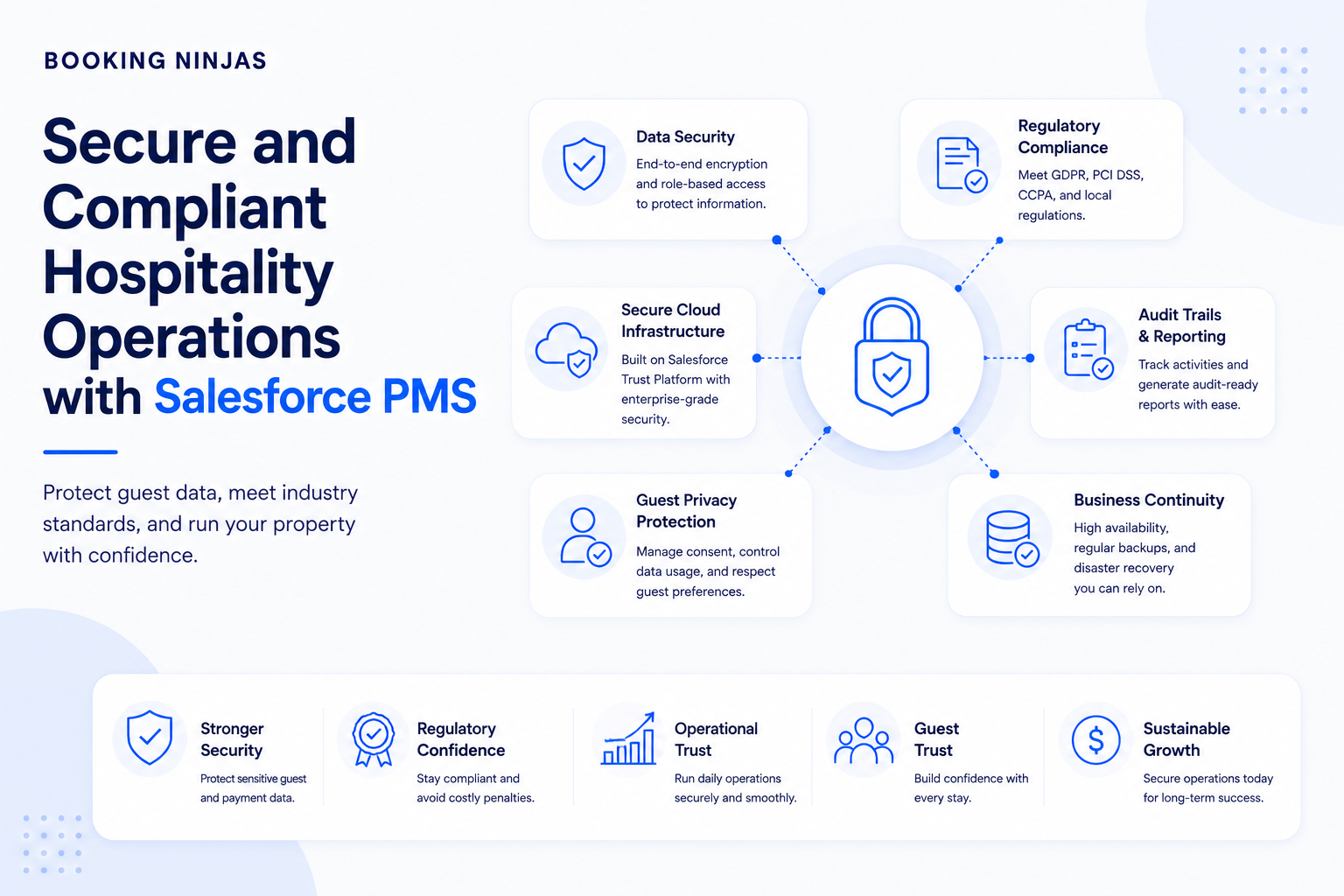
Booking Ninjas is a Salesforce-native platform for bookings and operations . Its operational applications can use the broader Salesforce foundation for data relationships, permissions, automation, reporting, and integration.
This can reduce the risk of creating another isolated operational application when Salesforce already plays an important role in the organisation's technology environment.
Significant new requirements can still require design, configuration, development, integration, testing, and implementation work.
Learn more about the Salesforce foundation behind Booking Ninjas .
What should you evaluate before selecting a new platform?
| Evaluation area | Question to ask |
|---|---|
| Workflow fit | Can the vendor demonstrate our real process, including exceptions? |
| Configuration | Which requirements are standard, configurable, integrated, or custom? |
| Data | What will migrate, what will not, and who validates the result? |
| Integrations | Which systems remain, what information moves between them, and how are failures handled? |
| Users | Which roles use the platform, what permissions do they need, and what training is required? |
| Implementation | What are the phases, dependencies, responsibilities, and acceptance criteria? |
| Support | What happens after go-live when users find an issue or a workflow needs adjustment? |
| Expansion | Can future processes be added without immediately replacing the underlying platform? |
How does Booking Ninjas approach operational technology adoption?
Booking Ninjas is a Salesforce-native platform for bookings and operations. The platform connects operational records with Salesforce workflows, permissions, reporting, automation, and integration capabilities.
The implementation still needs to be designed around the organisation's actual operating model, existing data, connected systems, users, and required workflows.
Configure structured processes, routing, approvals, assignments, escalation, and operational workflows.
Explore Workflow & Process Management →Connect external financial, CRM, payment, analytics, and operational platforms according to the required architecture.
Explore Integrations →See how Booking Ninjas uses Salesforce as the foundation for operational records, workflows, reporting, permissions, and extensibility.
Explore Salesforce →Review onboarding, platform, client portal, and Salesforce-org guidance around the Booking Ninjas experience.
Explore the Knowledge Centre →Review current answers about implementation, data migration, training, support, integrations, pricing, and platform use.
Explore Booking Ninjas FAQs →Frequently asked questions
What is the biggest barrier to property management technology adoption?
There is no single barrier for every organisation. Common problems include unclear requirements, weak workflow design, integration uncertainty, poor data quality, implementation cost, limited user involvement, insufficient training, and unclear ownership after go-live.
How can property managers reduce resistance to new software?
Involve the people who perform the workflow, explain the operational reason for the change, test realistic scenarios, simplify unnecessary steps, train users according to their roles, and maintain a clear support path after launch.
Should property managers replace every legacy system at once?
Not necessarily. Existing accounting, ERP, CRM, payment, access, or other specialist systems may remain part of the architecture. The important decision is which system owns each process and record and how required information moves between systems.
Does cloud software remove the need for implementation?
No. Cloud software can reduce local infrastructure requirements, but organisations can still need workflow configuration, data migration, integrations, permissions, testing, training, and change management.
Can automation make software adoption easier?
Automation can simplify predictable workflow steps after the organisation has defined the process, rules, ownership, and exceptions. Automating an unclear process can instead make implementation problems harder to identify.
How should AI be introduced into property management operations?
Start with a defined use case and the data required to support it. AI can assist with tasks such as summarisation, classification, forecasting, pattern detection, prioritisation, or recommendations where appropriate data and workflows exist. Human review may still be necessary for exceptions or high-impact decisions.
Is Booking Ninjas built on Salesforce?
Yes. Booking Ninjas is a Salesforce-native platform for bookings and operations. Its operational applications use the Salesforce foundation for connected data, workflows, permissions, automation, reporting, and integration.
Start with the workflow you need to improve
Show Booking Ninjas how your current operation works, where the barriers are, and which systems need to stay connected. The discussion can then focus on the implementation required rather than a generic feature demonstration.
.jpg)


-web.jpg)