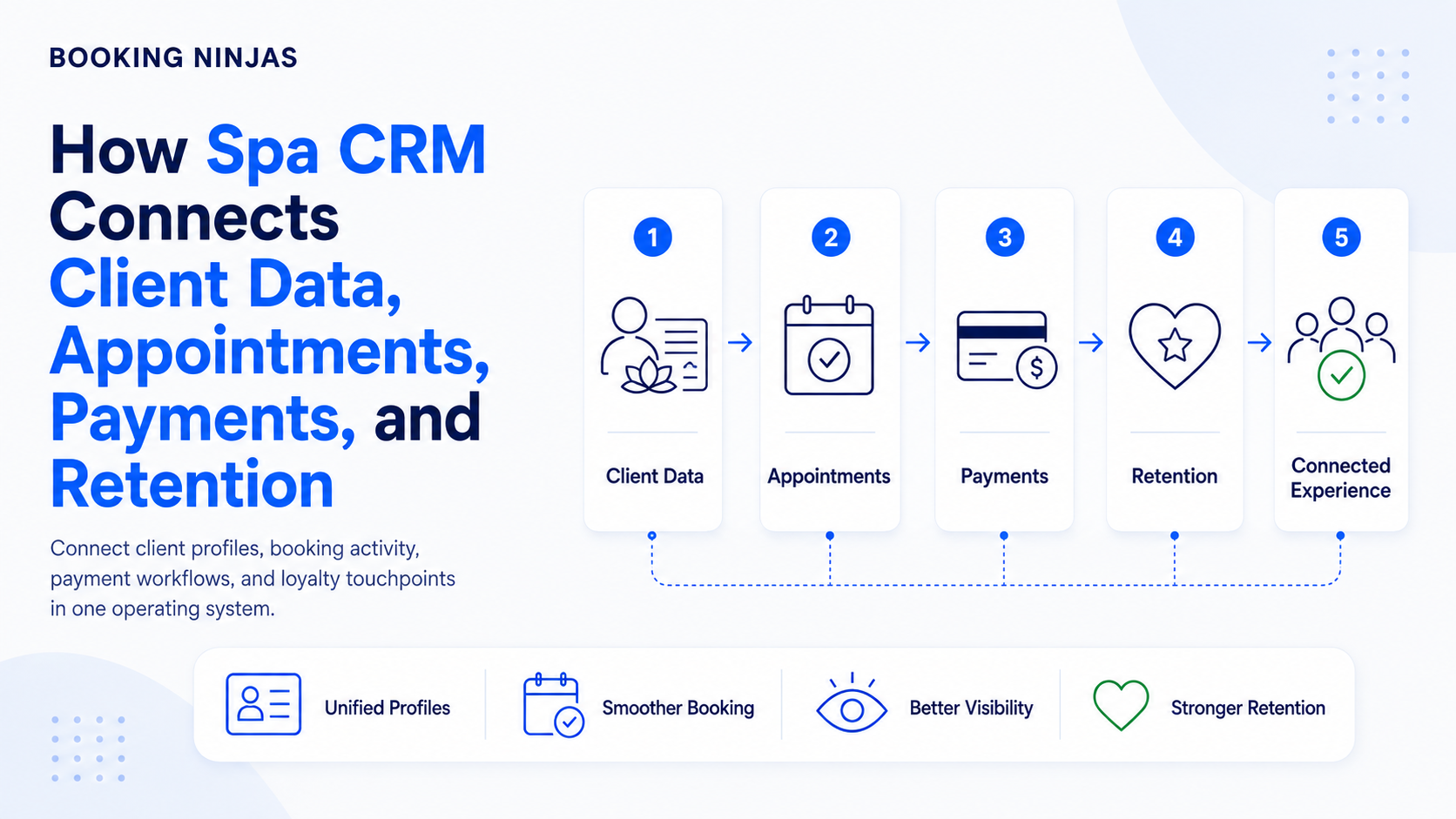
Spa client relationships develop across more than one appointment. Each visit can involve a client profile, treatment, practitioner, room, payment, package or membership, preference, and follow-up. When those records are separated, staff lose useful context from one interaction to the next.
What should a spa CRM actually manage?
A CRM organizes the relationship around the client. In a spa or wellness environment, that relationship becomes more useful when it can be connected to what the client has actually booked, purchased, requested, or experienced.
- Client identity and contact information
- Appointment and visit history
- Treatment notes and relevant preferences
- Practitioner and service history
- Packages, memberships, and recurring services
- Charges, payments, and transaction history
- Leads and consultation activity
- Relevant feedback and follow-up activity
The exact information a spa should retain depends on its services, operating model, privacy requirements, permissions, and applicable regulations. This is particularly important for medical spas or businesses handling sensitive client information.
Why isn't appointment software alone enough?
Appointment software answers an important question: who is booked for what and when?
CRM answers a different question: what do we know about the relationship with this client?
Spa operations need both perspectives. A reservation may need to connect the client to a treatment, therapist, room, time slot, rate, package, and payment. The next visit becomes easier to understand when those records remain associated with the same client.
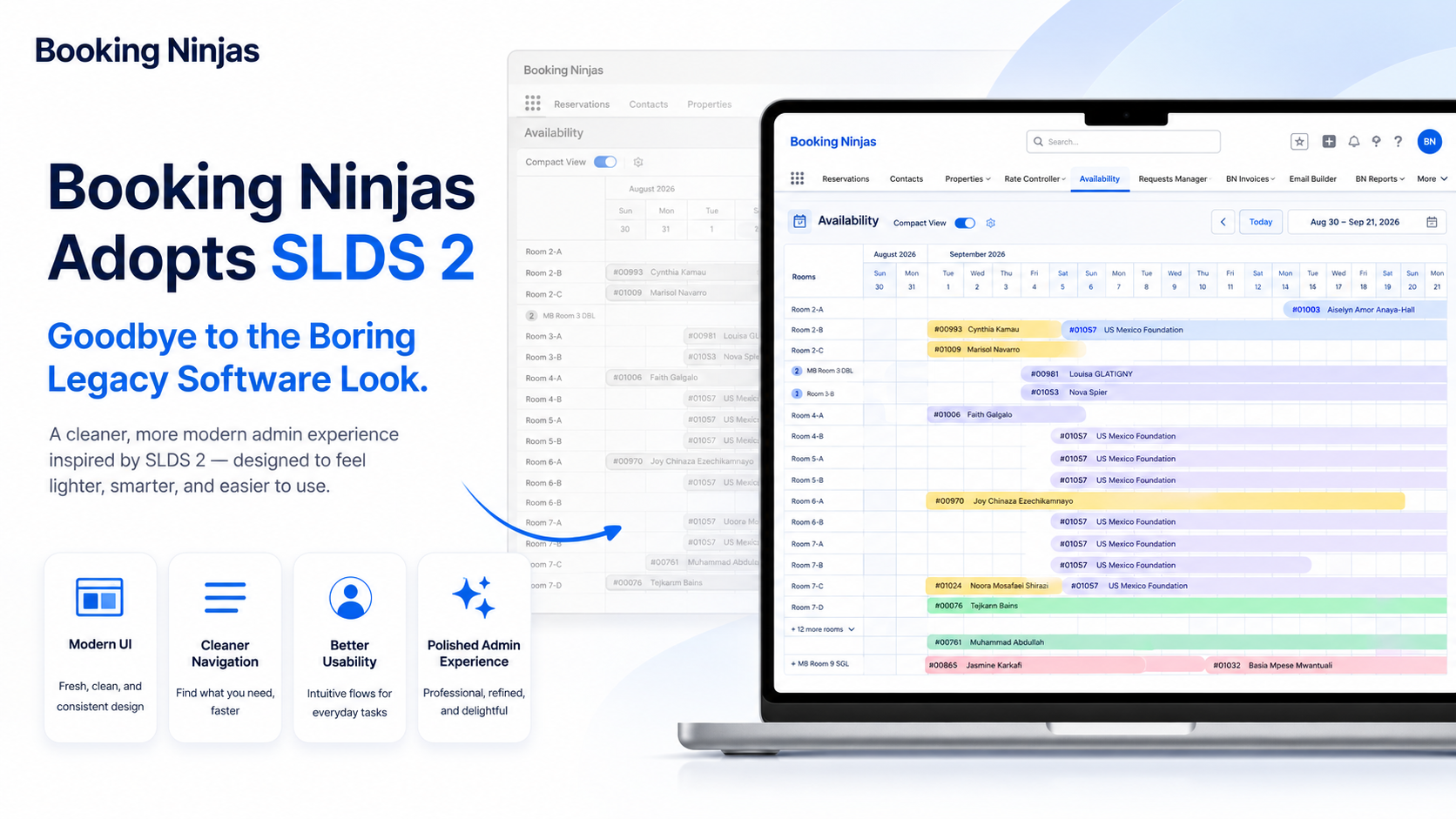
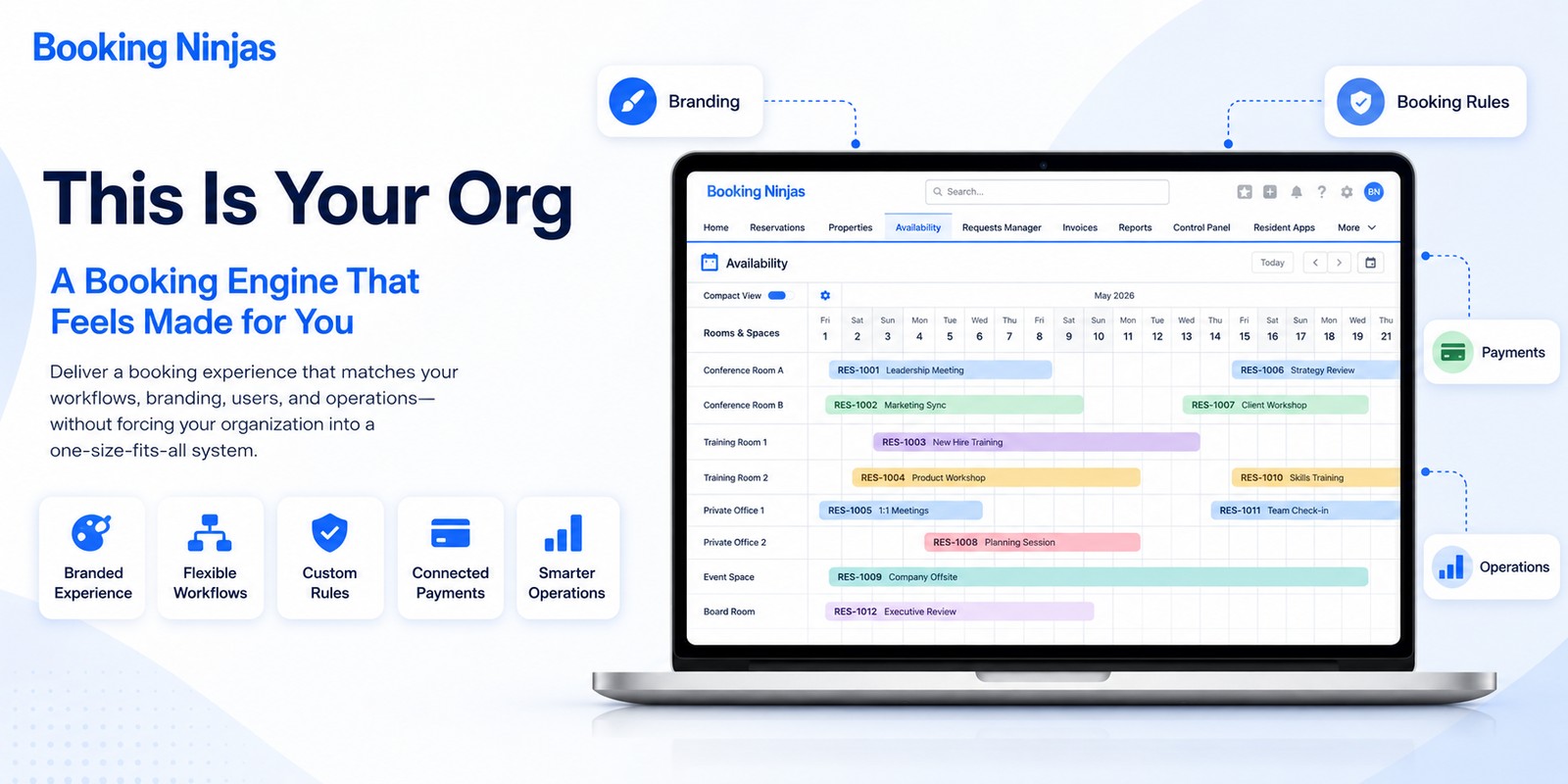
Booking Ninjas' Reservation Management provides the structured booking layer, while its Salesforce-native foundation keeps reservations closer to CRM and operational data.
How can connected client data support retention?
Software does not create loyalty by itself. What it can do is make continuity easier for the staff and systems serving the client.
Connect the appointment or inquiry to the correct client record.
Give authorized staff relevant history, services, preferences, packages, and account context.
Coordinate the current treatment, practitioner, resource, payment, and service workflow.
Preserve useful history for future bookings, renewals, or appropriate follow-up.
What should connect to the spa client record?
| Information | Operational value | Related Booking Ninjas capability |
|---|---|---|
| Appointments | Connect treatments, dates, times, resources, and booking history to the client. | Reservation Management |
| Payments | Associate charges, deposits, balances, and payment activity with the service and client involved. | Billing & Payment |
| Retail and service transactions | Keep relevant purchases linked to the customer, service, membership, or other operational record. | Point of Sale |
| Packages and memberships | Track the ongoing commercial relationship beyond a single appointment. | Membership Portal |
| Follow-up processes | Route predictable tasks, approvals, reminders, or internal actions according to configured rules. | Workflow & Process |
| External systems | Connect marketing, accounting, communication, or other applications where they remain part of the spa's stack. | Integrations |
What does useful personalization look like?
Personalization should begin with relevant context, not simply with inserting a first name into a message.
For example, authorized staff may need to know which services a returning client previously booked, whether they have an active package or membership, which practitioner handled a previous visit, or whether there are relevant preferences recorded for the service.
That information can help staff prepare for the appointment and reduce the need for the client to repeat the same information at every visit.
Personalization should still have boundaries
Not every note should be available to every employee, and sensitive information should not automatically become marketing data. Permissions, consent, purpose, and the nature of the service should determine how information is stored and used.
Where do packages and memberships fit?
Many spas operate relationships that continue beyond individual appointments. A client may purchase a treatment package, maintain a membership, use recurring services, or make purchases across multiple visits.
These arrangements become easier to understand when membership, booking, and payment activity remain connected to the same client record.
For member-based spa models, a Membership Portal can provide account, booking, and payment visibility while the operational system maintains the relationship behind it.
This is different from assuming every spa needs a traditional points-based loyalty program. Packages, memberships, repeat bookings, service continuity, and appropriate follow-up can all support an ongoing relationship without requiring the same loyalty structure for every business.
What should spa CRM automation actually do?
Automation is useful when the next step is predictable. Instead of relying on staff to remember every internal handoff, a configured workflow can respond to changes in a booking, payment, lead, membership, or other record.
Depending on the setup, a workflow might assign a task, request an approval, update a record, trigger a notification, or route an exception to the appropriate person.
Booking Ninjas' Workflow & Process Management provides the structured process layer for this type of automation.
How should CRM connect with spa marketing?
CRM can provide useful audience context for communication, but the operational platform does not have to replace every dedicated marketing tool.
A spa may continue using an email, SMS, marketing automation, reputation, or campaign platform while connecting selected client information through integrations where appropriate.
This allows the business to separate the roles clearly: the CRM organizes the client relationship, operational systems record the service activity, and specialized communication tools can handle campaigns where they are required.
What can managers learn from connected spa data?
Connected records can give managers a clearer view of what is happening across appointments, clients, practitioners, rooms, payments, packages, and memberships.
The useful questions are operational:
- Which services are being booked most often?
- How is appointment demand changing?
- Which rooms or resources are heavily used?
- How do packages and memberships affect bookings?
- Where are payment or workflow exceptions occurring?
- Which client or operational processes need review?
These signals can support management decisions, but they do not guarantee retention, revenue, profitability, or any specific commercial outcome.
How does Booking Ninjas connect CRM with spa operations?
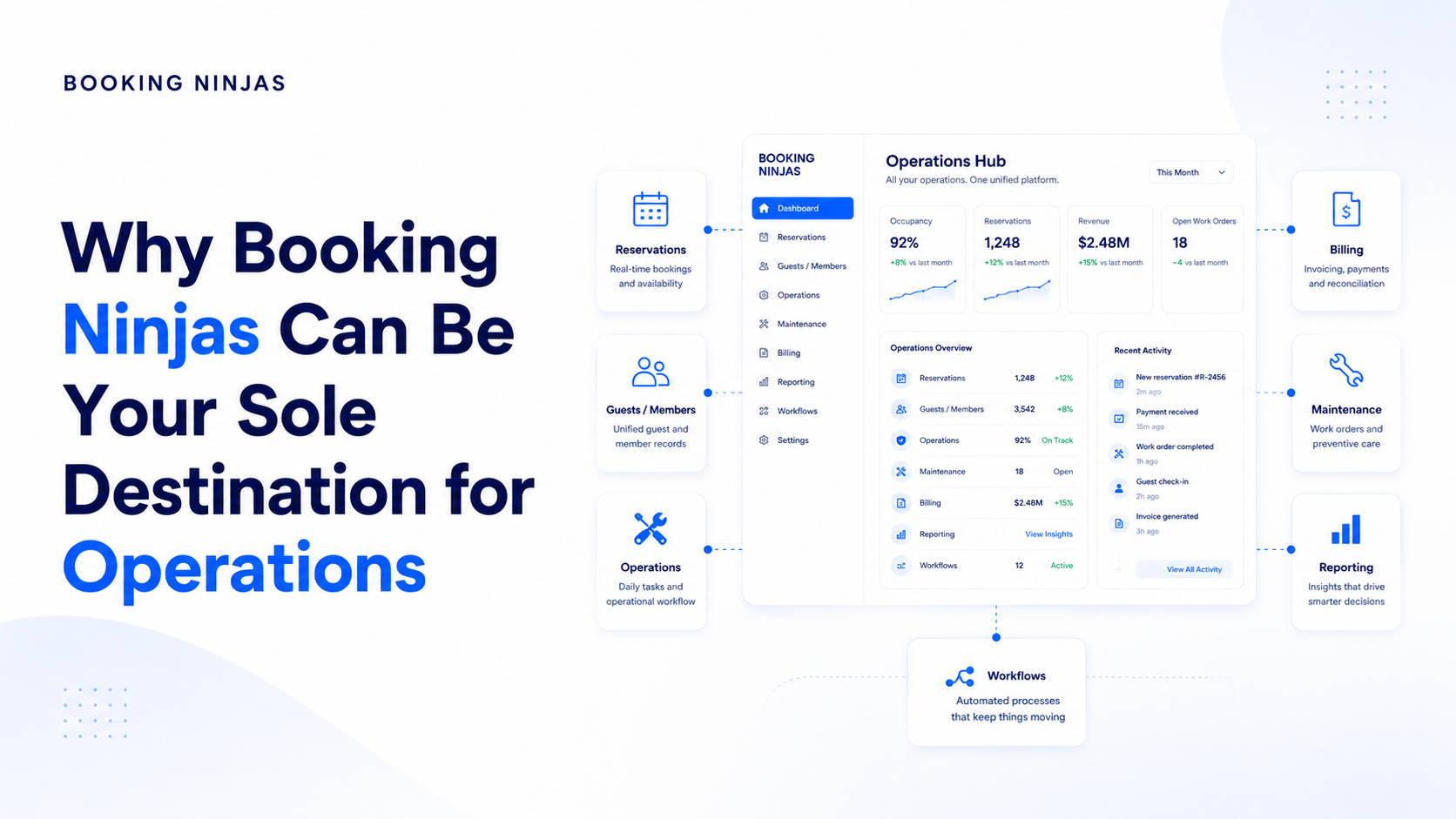
Booking Ninjas is a Salesforce-native platform for bookings and operations . Its Spa & Med Spa Management solution brings client records closer to appointments, treatments, staff schedules, rooms, payments, packages, memberships, leads, and other operational activity.
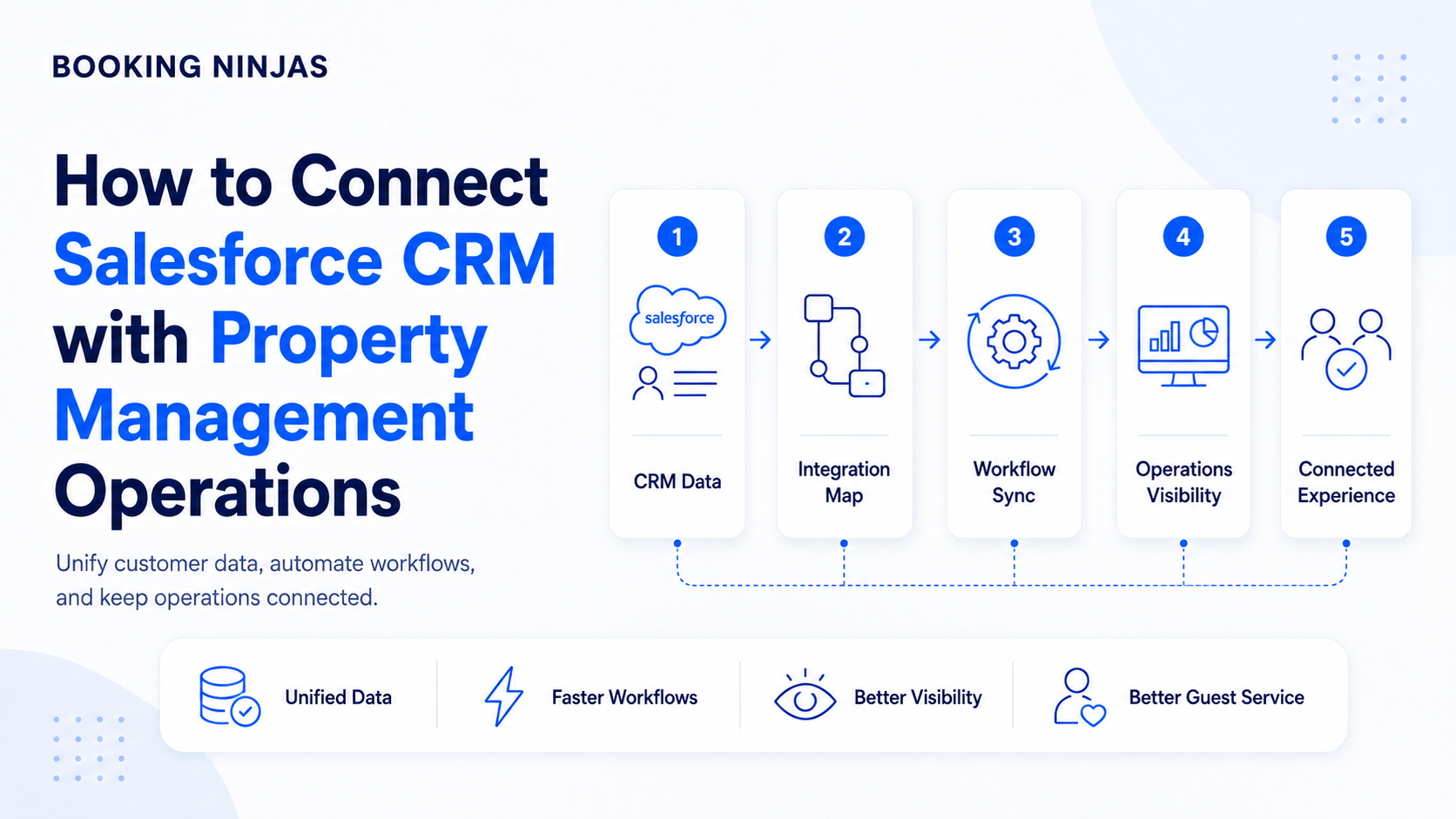
Because the platform is built on Salesforce, CRM is part of the underlying operating environment rather than a completely separate database that only receives selected information from the spa system.
External tools can still remain where they make sense. The objective is not to replace every application, but to give the client relationship a clearer connection to the operation behind it.
Connect appointments, clients, staff, treatments, payments, packages, memberships, and facilities.
Explore Spa & Med Spa →Structure bookings around clients, services, schedules, and available resources.
Explore Reservation Management →Keep service charges, balances, recurring billing, and payment activity connected to operations.
Explore Billing & Payment →Connect point-of-sale transactions with customers, services, memberships, and operational records.
Explore Point of Sale →Give members visibility into their accounts, bookings, and payment history.
Explore Membership Portal →Connect CRM records with permissions, workflows, reporting, automation, and operational applications.
Explore Salesforce DNA →Frequently asked questions
What is spa CRM software?
Spa CRM software organizes information about the client relationship. It becomes more useful when client profiles connect with appointments, treatment history, payments, packages, memberships, preferences, and other relevant spa activity.
Is spa CRM the same as appointment scheduling software?
No. Appointment software primarily manages when services are booked and which resources are required. CRM organizes the customer relationship. A connected spa platform can bring both types of information together.
Can spa CRM support client retention?
It can support retention by giving staff better continuity across client interactions and by connecting relevant history, appointments, memberships, packages, payments, and workflows. Software itself does not guarantee repeat business or loyalty.
Does Booking Ninjas support spa packages and memberships?
Yes. Booking Ninjas' Spa & Med Spa solution supports packages, memberships, recurring services, payments, and related client records. The exact setup depends on the spa's operating model and implementation requirements.
Is Booking Ninjas built on Salesforce?
Yes. Booking Ninjas is a Salesforce-native platform for bookings and operations, allowing CRM and spa operational records to use the same broader platform foundation.
Connect the client relationship to the spa operation
Bring client records, appointments, treatments, staff, payments, packages, memberships, and workflows into a clearer Salesforce-native operating environment.