Pricing short-stay or variable-rate condo rentals becomes harder when demand, availability, booking pace, seasons, and portfolio conditions change faster than managers can review them manually.
Why does static condo pricing become difficult to manage?
A fixed rate can be useful as a baseline, but it cannot automatically respond when demand or availability changes.
Pricing conditions that can change over time
- Season and date range
- Current availability
- Occupancy or capacity
- Time remaining before arrival
- Booking pace and demand patterns
- Minimum or maximum rate rules
External information such as market benchmarks, events, or other demand signals can also matter when those data sources are available and connected to the pricing workflow.
What does AI-powered smart pricing actually do?
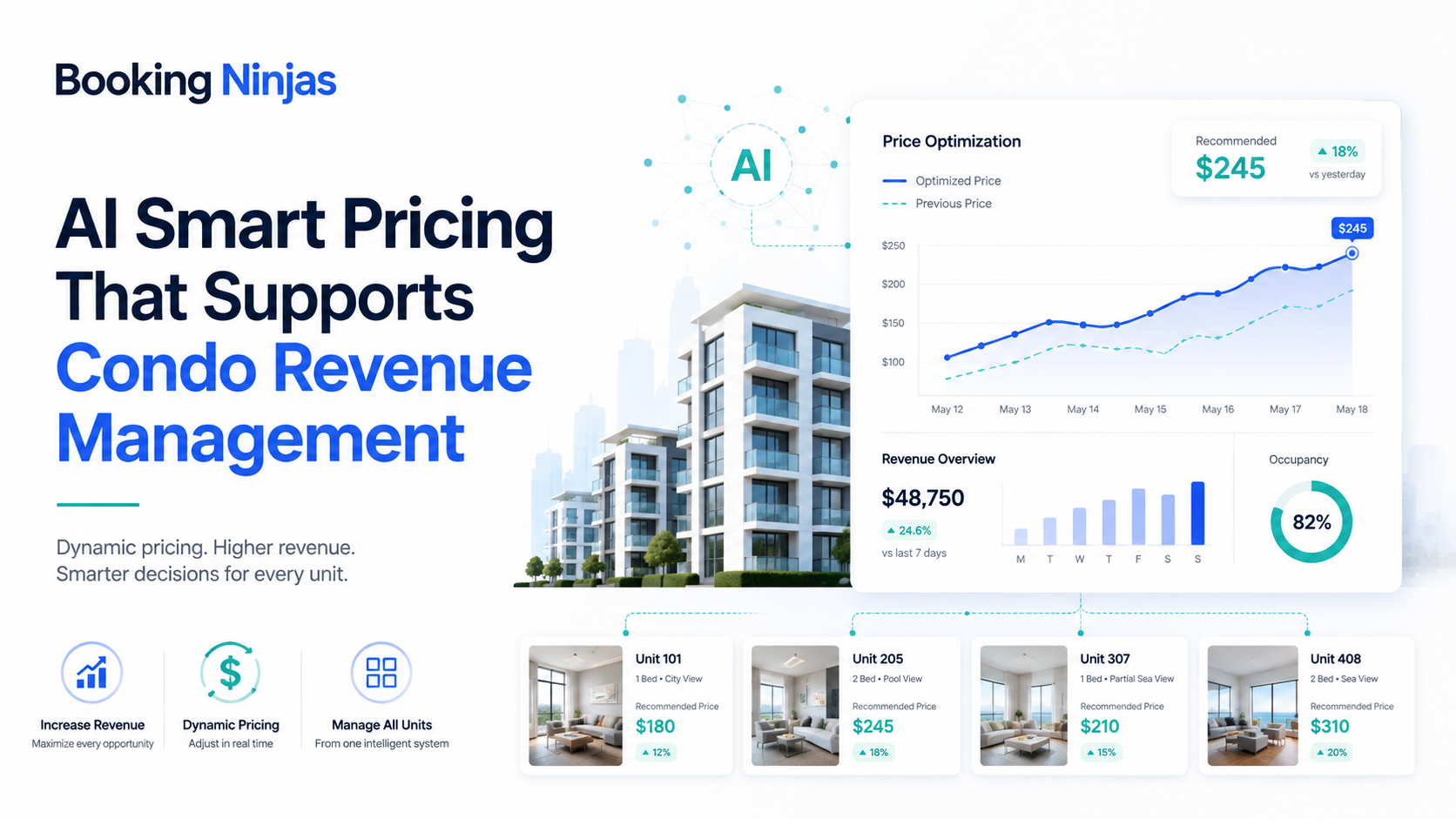
AI can help identify patterns or pricing opportunities from available data. Rules then determine how much freedom the pricing workflow has to act.
| Input or control | How it can support pricing |
|---|---|
| Demand | Helps identify periods where pricing pressure may be stronger or weaker. |
| Availability | Connects pricing decisions to remaining inventory. |
| Occupancy or capacity | Allows pricing rules to respond as more inventory is committed. |
| Booking lead time | Allows different pricing logic as the arrival date gets closer. |
| Seasonal rules | Establishes different rate structures for known periods. |
| Minimum and maximum rates | Keeps automated adjustments within defined boundaries. |
| Historical performance | Provides additional context for patterns and future pricing decisions. |
The objective is not to calculate one permanent “perfect price.” Pricing remains a decision that changes as the operating context changes.
Where should pricing rules end and AI begin?
Not every pricing decision requires AI. Known policies are usually better handled through transparent rules.
Good candidates for rule-based pricing
- Minimum and maximum rates
- Seasonal price changes
- Defined occupancy thresholds
- Minimum-stay policies
- Approval requirements
- Property or unit-specific pricing rules
AI becomes more useful where the system needs to identify demand patterns, analyze performance, forecast changes, or recommend pricing opportunities from larger amounts of data.
How should condo operators introduce smart pricing?
- Connect pricing to availability and reservations Make sure rate decisions use the same operational information that determines whether a unit can actually be booked.
- Define pricing boundaries Establish minimum rates, maximum rates, seasonal rules, approval requirements, and other policies before allowing automation.
- Review recommendations and behavior Give managers time to understand how the pricing logic behaves, especially around unusual demand, exceptions, and different unit types.
- Measure performance and refine the rules Review rate performance, occupancy, booking pace, revenue, and other relevant indicators instead of assuming dynamic pricing automatically improves financial results.
How does Booking Ninjas support smarter pricing?
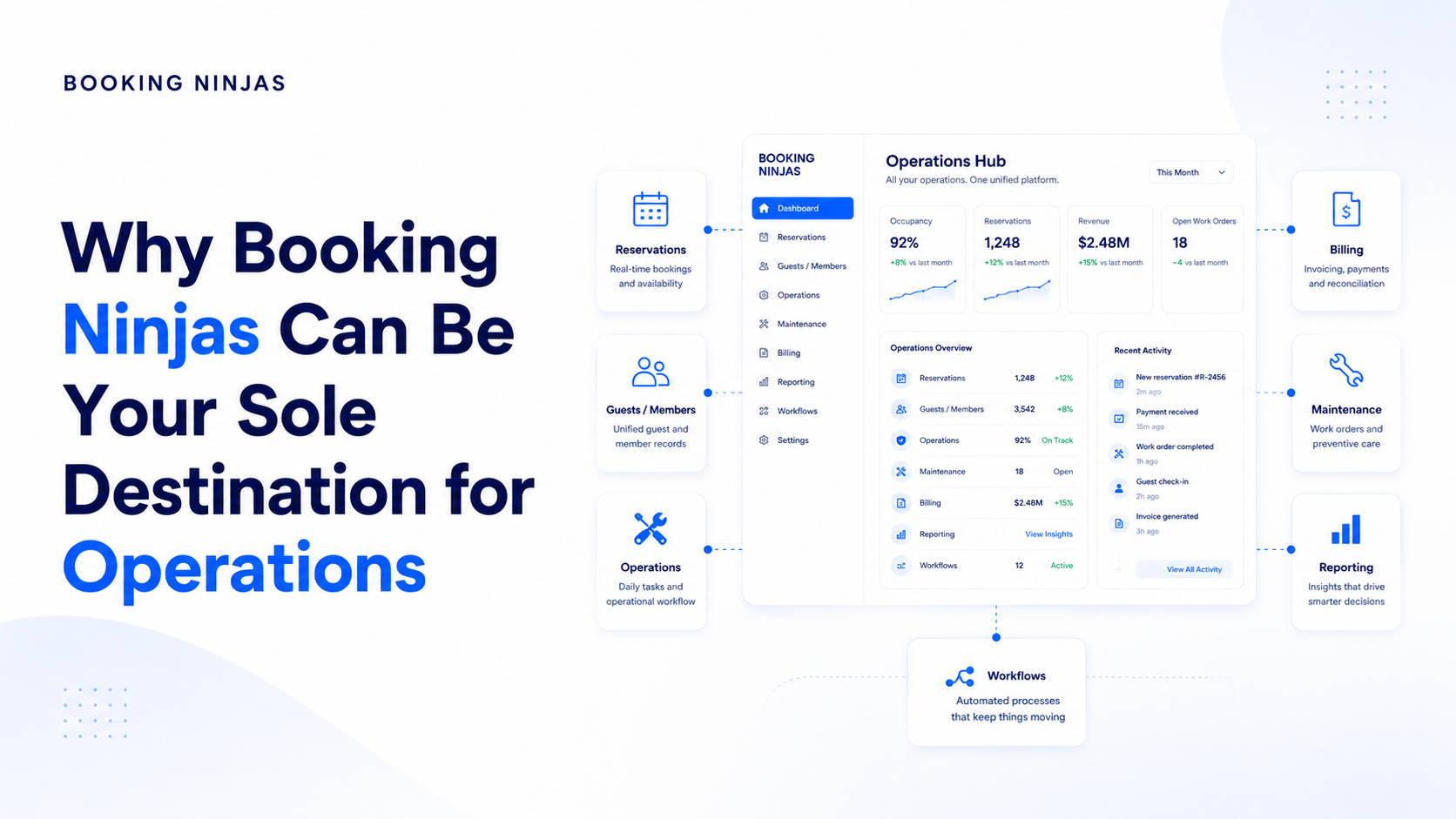
Booking Ninjas is a Salesforce-native platform for bookings and operations. Pricing can therefore operate alongside reservation, availability, operational, and performance data rather than as a completely separate process.
Set and automate rate rules
Manage seasonal pricing, dynamic pricing conditions, rate boundaries, and other pricing rules.
Rate Management →Keep rates connected to availability
Pricing decisions are more useful when the system understands the inventory that remains available.
Availability Management →Review pricing performance
Analyze demand, capacity, pricing performance, and other information that can support rate decisions.
Pricing Analytics →Connect pricing to revenue analysis
Evaluate pricing and revenue performance across periods, segments, locations, or other relevant operating dimensions.
Revenue Optimization →Where does AI fit?
Booking Ninjas' AI capabilities can support predictive booking and revenue intelligence where the available data and configured workflow support the intended use.
If important market or channel information lives outside Booking Ninjas, the integration layer can be evaluated for the required data connection.
Because Booking Ninjas is built natively on Salesforce, pricing data can also remain connected to broader records, workflows, reporting, permissions, and automation within the platform. Learn more about Salesforce DNA .
Frequently asked questions
What is AI smart pricing for condo rentals?
AI smart pricing uses available booking, demand, availability, pricing, and performance information to support rate recommendations or adjustments. The exact inputs depend on the system and connected data sources.
Does dynamic pricing guarantee more revenue?
No. Pricing tools can help operators respond more systematically to changing conditions, but revenue still depends on demand, property quality, availability, competition, operating strategy, and how pricing rules are configured.
Should condo managers let AI change every rate automatically?
Not necessarily. Operators can use minimum and maximum rates, seasonal rules, thresholds, approvals, and human review to determine how much pricing activity should be automated.
Which Booking Ninjas features support smart pricing?
Relevant Booking Ninjas capabilities include Rate Management, Availability Management, Pricing Analytics, Revenue Optimization, AI, integrations, and the Salesforce-native platform foundation. The exact setup depends on the portfolio, data sources, pricing strategy, integrations, and implementation scope.
Connect pricing to the operation behind it
Bring rates, availability, reservations, pricing rules, analytics, and revenue information into one operating model, then decide where automation and AI should support the strategy.