
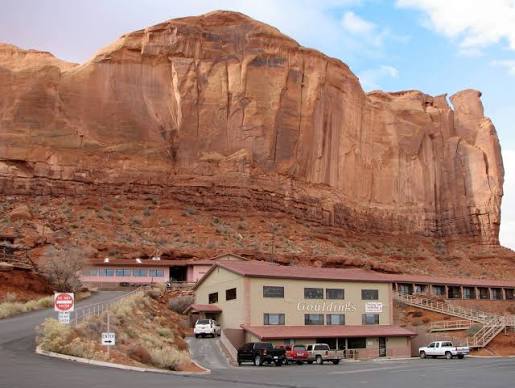
Goulding’s Monument Valley had one guest destination, but many different operations and systems working behind it.
Goulding’s Resort combines lodge rooms, villas, RV sites, campground stays, dining, tours, retail, and other guest services around the Monument Valley experience.
Booking Ninjas worked with Goulding’s alongside a consulting partner to support a technology direction that looked at the whole operation instead of treating every department as a separate software problem.
The challenge: one guest experience, many systems behind it
At the time of the project, different parts of Goulding’s operation relied on separate on-premise systems across reservations, point of sale, room access, retail, communications, and related functions.
That becomes difficult when one guest can interact with several parts of the property during the same stay.
- Hotel rooms and villas
- RV and campground inventory
- Groups and meeting spaces
- Guest history
- Housekeeping
- Maintenance
- Restaurant and POS activity
- Payments and reporting
Each department may have a different job, but the information often belongs to the same guest, reservation, unit, or transaction.
Different resources needed different workflows
A hotel room, villa, RV site, campground unit, and meeting space can all be reserved.
But that does not mean they should all follow one identical workflow.
Accommodation may depend on nightly availability and rates. An RV site has different inventory details. Meeting space may depend on event dates and group requirements. Restaurant transactions follow another process again.
The useful technology direction was therefore not to flatten Goulding’s into a standard hotel model.
It was to let different resources keep the rules they needed while connecting the underlying operating picture.
The Booking Ninjas direction: connect the whole destination
The historical project scope looked across several parts of the Goulding’s environment rather than one isolated reservation function.
Connect rooms, villas, RV inventory, campground resources, groups, and other reservable spaces to structured availability.
Keep reservation and guest information useful as the person interacts with other parts of the resort.
Connect housekeeping, maintenance, service requests, and other work to the accommodation or guest involved.
Bring payments and POS activity closer to bookings, guests, services, and operational records.
Give management a stronger foundation for occupancy, revenue, tax, guest, and operational reporting.
How the operating requirements fit together
| Goulding’s need | Booking Ninjas direction | What a connected model can improve |
|---|---|---|
| Manage different stay types | Booking Management | Rooms, villas, RV sites, campground inventory, and other resources can sit inside a shared booking structure while keeping their own rules. |
| Keep availability reliable | Availability + Reservation Management | Bookings, restrictions, capacity, and inventory changes can feed the same availability picture instead of requiring repeated manual checking. |
| Coordinate housekeeping and maintenance | Work Order Management | Operational work can be connected to the room, villa, site, or other location where the work actually belongs. |
| Connect restaurant activity | Point of Sale | Transactions can be connected with bookings, services, customers, inventory, and operational reporting instead of remaining isolated activity. |
| Support groups | Group Booking + Billing Workflows | Related reservations and charges can stay closer together when one group touches several accommodations or services. |
| Work away from a fixed desk | Mobile / Tablet Access | Staff can work closer to guests and remote areas of the operation rather than routing every action through one workstation. |
| Use the guest history | Salesforce Customer Record | Stay history, transactions, requests, and other approved activity can contribute to a more useful customer picture. |
| Keep room to integrate | Salesforce + API-Based Integrations | The operating environment can connect with outside channels and specialist systems rather than requiring every tool to be replaced at once. |
One guest can touch several parts of the resort
A simple example makes the problem easier to see.
A guest books a villa at Goulding’s. During the stay, they eat at the restaurant and charge the meal to their accommodation. Later, they report an issue in the villa and need help from staff.
To the guest, those are all parts of one stay.
In a fragmented technology environment, however, the villa reservation, restaurant transaction, guest profile, maintenance problem, and staff response may all live in different places.
That does not mean every department sees everything. Salesforce permissions can still determine which users see and change which records.
Front Desk, Housekeeping, and Maintenance needed the same operating picture
The Front Desk may know that a guest is arriving.
Housekeeping needs to know whether the accommodation is ready.
Maintenance needs to know when a unit has a problem.
Management needs to know whether an issue is still open and whether the unit can continue being used normally.
Those teams have different jobs, but the work can still connect to the same room, villa, site, reservation, or guest.
Booking Ninjas' current Work Order Management capability follows that model by connecting the location, assignment, status, priority, and history of operational work inside Salesforce.
The guest relationship did not stop when they left the room
Goulding’s also operates food, retail, and other guest services.
That creates another opportunity for fragmentation when a transaction happens in one system while the guest stay sits somewhere else.
The historical requirements specifically included restaurant and POS activity, room charges, mobile ordering and payment, and related transaction workflows.
Booking Ninjas' current Point of Sale supports the wider idea by linking transactions to customers, bookings, services, inventory, and operational records.
Operations needed to move beyond the front desk
Goulding’s also identified remote functionality as important.
That matters in a destination operation where guests and resources are spread across lodge buildings, villas, RV areas, campground inventory, and other parts of the property.
A staff member should not always have to return to one fixed front-desk workstation to see information or complete an operational action.
Mobile and tablet access create a different model: staff can work closer to where the guest or operational issue actually is.
The business value comes from reducing gaps between operations
We do not have verified before-and-after metrics for this project, so the value should not be presented as a specific percentage improvement.
The operational model shows where a connected system can reduce avoidable work and protect revenue opportunities.
Connected records can reduce the need to enter or reconcile the same guest, booking, payment, or operational information in several places.
Housekeeping, maintenance, reservations, and service work can stay connected to the resource or guest involved.
Clearer availability and unit status can help staff understand what accommodation or resource is actually ready to sell.
Restaurant, guest, room-charge, and payment activity can become easier to follow when it shares an operating context.
Structured reservation, package, rate, and group workflows can reduce dependence on manual coordination as booking complexity increases.
Operational and financial data can provide management with a clearer view when it comes from connected records rather than isolated systems.
The architecture also needed somewhere to grow
Goulding’s requirements looked beyond the immediate workflows.
The project also considered future channel connectivity, automated rate updates, marketing, integrations, guest communication, and broader reporting needs.
That matters because an established destination does not stop changing after a new system is introduced.
The Salesforce foundation provides a way to add connections and workflows around the same operating records instead of beginning another software replacement every time a new requirement appears.
Goulding’s did not need to become a simpler business to fit the software
This is what makes Goulding’s a strong example of the Booking Ninjas approach.
The destination crosses several categories that traditional software often separates: hotel lodging, villas, RV and campground stays, group business, events, dining, retail, facilities, and guest services.
A rigid platform may ask the organization to decide which one of those businesses it really is.
Booking Ninjas can take the opposite approach: use a common Salesforce foundation, then configure different workflows around the parts of the operation that need them.
Different parts can keep different rules while still sharing the data and relationships that should remain connected.
Start with bookings, then connect what the destination needs
Booking Engine and Reservation Management can provide the core reservation structure.
A more complex resort can then extend that foundation with group booking, rate management, POS, payments, housekeeping, work orders, inventory, reporting, mobile access, portals, channel connectivity, and integrations where those capabilities solve a real operational problem.
The important point is not to install every module.
It is to connect the parts of the destination that already depend on one another.
For the wider use case, see the Resort Management solution .
Learn more about connected resort operations
See how bookings, capacity, restrictions, and other rules determine whether a room, site, space, or resource can still be booked.
How Availability Is Managed →See how maintenance work can stay connected to the room, unit, location, or asset where the issue actually belongs.
How Maintenance Connects to Rooms and Assets →See how bookings, payments, service activity, and other approved information can remain connected around the same customer.
What Is a Customer Record? →About this story: Booking Ninjas worked with Goulding’s Monument Valley alongside a consulting partner around a broad operational technology scope covering lodging, villas, RV and campground inventory, groups, guest activity, POS, operations, reporting, mobile functionality, and future integrations. The original requirements are used to describe the operational problem and technology direction; this page does not claim that every requested RFP capability was ultimately deployed or report unverified financial results.
Run one destination without making every operation a separate system.
See how Booking Ninjas can connect reservations, resources, guests, payments, POS, maintenance, staff workflows, reporting, and integrations around the way your destination actually operates.


.jpeg)





.jpg)















.png)